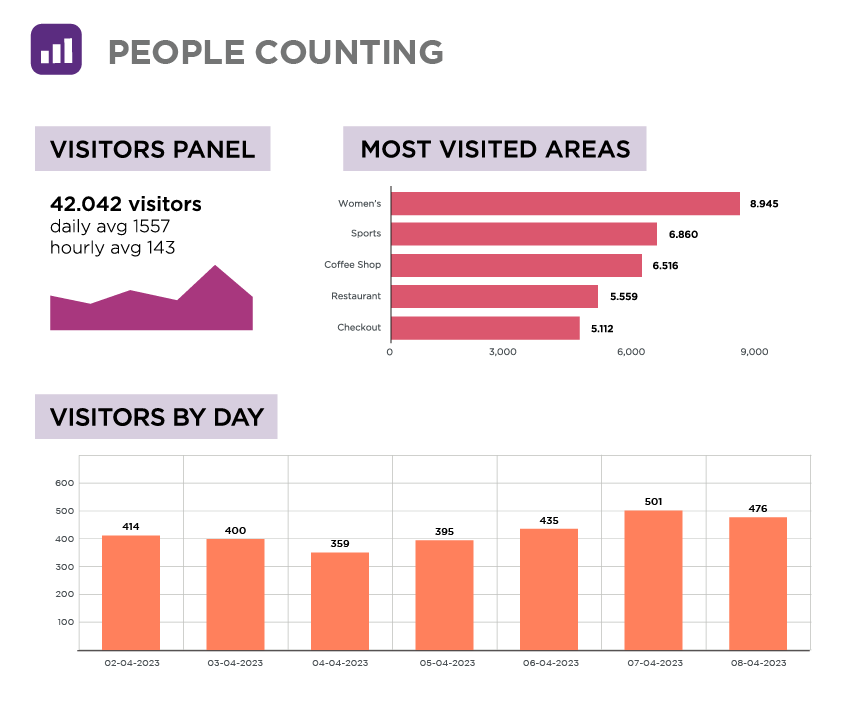
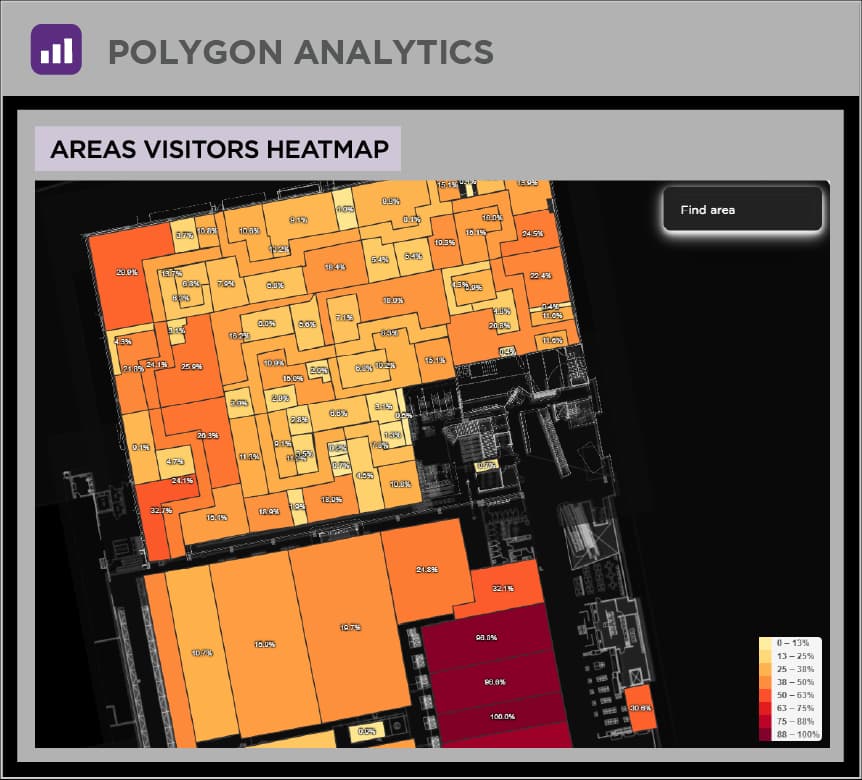
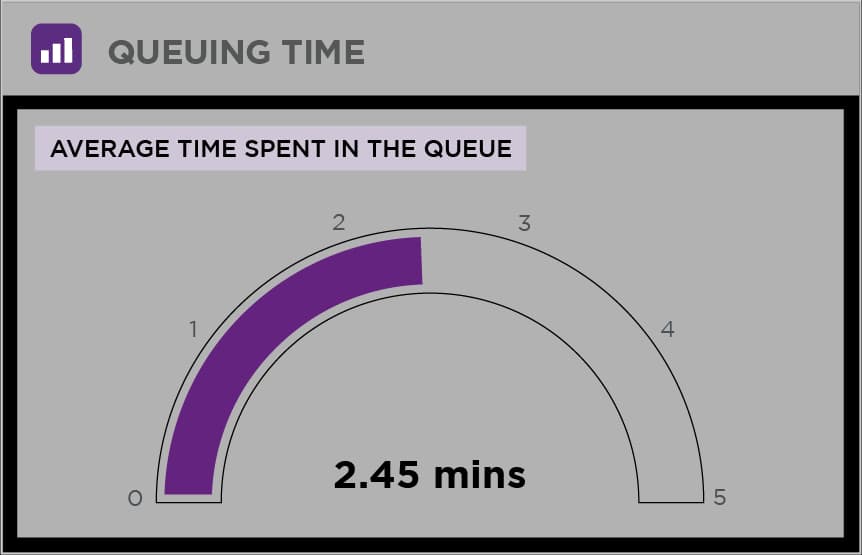
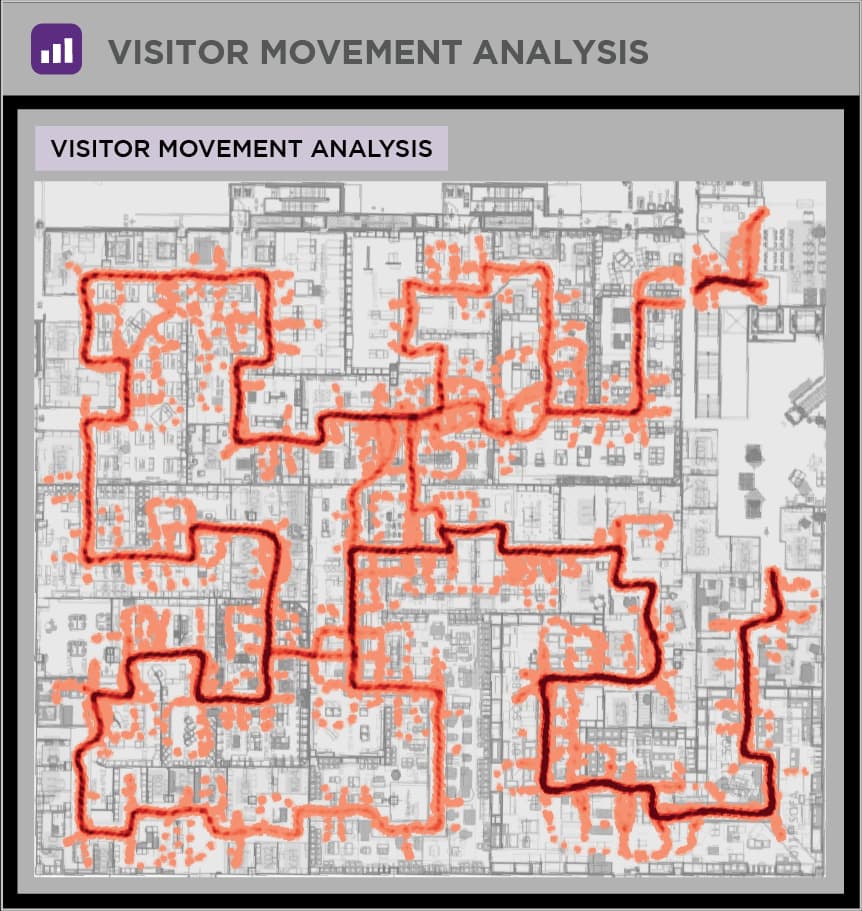
Ariadne is the privacy-first people counting platform. Hybrid Fusion combines a patented phone signal sensor with Time-of-Flight depth sensing for sub-meter accuracy across retail, airports, malls, and smart cities. No cameras, no PII, GDPR-native by design.
Counted in 32 countries. 12,000+ devices. 700M+ visitor trajectories.
Footfall, dwell, flowReal-time occupancyStaff exclusionGDPR + EU AI Act ready
Patented signal sensing plus Time-of-Flight depth sensing. Sub-meter accuracy across whole venues.
Trusted by Global Industry Leaders
People counting, in one paragraph
People counting (also known as footfall counting) is the automated measurement of visitor traffic and behavior across a physical venue. A modern people counting system tracks entries and exits in real time, monitors live occupancy, measures dwell time per zone, and maps the flow between zones, all without identifying any individual.
Retail teams use people counting data to compute conversion rate, validate window changes, and align staffing to peaks. Airports use people counting to manage queues at security and the gate, and to lift non-aeronautical revenue. Shopping centres and smart cities use it for tenant analytics, event attribution, and pedestrian flow planning. Across each context, the same Hybrid Fusion sensor mesh delivers footfall counts, occupancy levels, dwell-time analytics, and visitor flow maps.
What you measure
Footfall, occupancy, dwell time, and flow on one platform
One sensor mesh, four metrics. Each is a building block for a different operations decision. Hybrid Fusion people counting sensors capture all four from the same hardware, so retail, airport, and venue teams stop choosing between accurate door counts and zone-level analytics.
Footfall counting
Footfall counts entries and exits over time.
Daily traffic baselines, week-over-week trend analysis, conversion-rate denominator. Footfall counting is the most-asked people counting metric across retail, airports, and venues, and it is the input to capture-rate analysis and staff scheduling.
Live occupancy
Occupancy is the number of people in a zone at a given moment.
Capacity alerts, queue management, ESG and HVAC tuning. Real-time occupancy monitoring is the people counting metric most often surfaced as a live dashboard for operations teams and as a safety signal for facilities.
Dwell time
Dwell time is how long visitors spend in a specific area.
Display engagement, queue duration, zone performance. Dwell time analytics is what turns raw people counting traffic into conversion attribution: it tells you whether the visitor stopped, browsed, queued, or walked past.
Flow and journeys
Flow maps how visitors move between zones across a venue.
Layout optimization, congestion mapping, cross-shopping analysis. Flow analytics is the multi-zone counterpart to people counting: instead of counting each door in isolation, it stitches the visitor's path across the whole facility.
Most people counting systems pick one technology and live with its blind spots. Ariadne fuses two. The signal layer carries continuity across zones; the Time-of-Flight layer validates the absolute count at every entrance.
Layer 1
Patented signal sensing
Phones broadcast presence signals as they search for connections. Ariadne's signal sensor detects those broadcasts to track movement across multiple zones and floors. By default, no MAC addresses, no device IDs, no app required. The signal layer is what makes multi-zone people counting and journey analytics possible without rolling out a camera at every viewing angle.
Time-of-Flight measures distance, not appearance. At entrances and other choke points, Ariadne's ToF units give device-independent counts that don't depend on whether a visitor is carrying a phone. Lighting and occlusion don't affect the measurement. ToF is the people counting layer that delivers the headline accuracy figure: up to 99% in optimal conditions and 95%+ in typical retail and airport deployments.
Most operations teams inherit a camera-based system. Here is what changes when you replace it.
The alternative
Cameras and LiDAR
Most legacy people-counting installs
With Ariadne
Ariadne
Hybrid Fusion: signal sensing and Time-of-Flight
Accuracy
85-95% in good conditions. Drops fast under lighting changes, occlusion, and dense crowds.
Accuracy
Up to 99% in optimal conditions. 95%+ in typical retail and airport deployments. Holds up in low light and at peak density.
Privacy
Captures faces, bodies, and movement patterns.
Privacy
No faces, no device IDs, no PII captured. Identifier-free by design, so there is nothing to anonymise.
Hardware
Cameras at every viewing angle. Cabling, mounting, lens upkeep.
Hardware
Compact signal sensors plus ToF units. Fewer pieces, smaller footprint, zero cameras.
Coverage
Only what each lens sees. Blind spots between cameras.
Coverage
Signal sensing reaches across whole venues. ToF validates counts at choke points.
Conditions
Lighting-dependent. Occlusion drops accuracy.
Conditions
Signal works in low light and crowded scenes. ToF stays accurate in any condition.
Compliance
GDPR / CCPA / EU AI Act friction. Ongoing legal risk.
Compliance
GDPR by design. TÜV-certified. EU AI Act ready.
On accuracy
Signal sensing covers the dead zones between camera lenses without adding more lenses. Time-of-Flight stays accurate in low light and dense crowds where camera systems lose pixels and degrade.
On install
A camera mesh requires line-of-sight at every viewing angle, structured cabling, and lens upkeep. A Hybrid Fusion install replaces that with compact signal sensors at zone scale plus Time-of-Flight units at entrances. Fewer pieces, smaller footprint, no recording.
Every people counting system publishes a single headline accuracy number. Real-world accuracy varies by ceiling height, lighting, group density, and sensor placement. The table below is what Ariadne sees in the field across the four environment types most often deployed, alongside the band that camera-only and Wi-Fi-only systems typically deliver in the same conditions.
Environment
Hybrid Fusion (Ariadne)
Camera-only
Wi-Fi-only
Retail entrance, single-door
98–99%
92–98%
60–75% (sample-based)
Mall atrium, high-ceiling
96–98%
85–92% (occlusion drift)
55–70%
Airport gate / boarding area
95–98%
80–90% (lighting, density)
60–75%
Smart city / public square
94–97%
70–85% (weather, occlusion)
50–70% (MAC randomization)
Accuracy is validated during a calibration pilot at each customer site and audited quarterly. Single-day variance held under 5%; three-day moving average under 2%. Methodology and audit protocol are documented in the research note.
Camera vs camera-less people counting
Procurement matrix: nine attributes side by side
Most camera-vs-camera-less comparisons skip the lines procurement actually reads. This matrix lines up nine attributes a buyer in retail, transit, or the public sector typically scores during an RFP. Camera-based systems are the dominant installed base; Hybrid Fusion is Ariadne's camera-free architecture.
Attribute
Camera-based people counter
Hybrid Fusion (Ariadne)
Privacy posture
Captures faces, bodies, and movement patterns by default. Privacy depends on post-capture blurring and access control.
No optical capture at the sensor. Signal sensing reads radio emissions; Time-of-Flight measures distance. Privacy is structural, not policy.
GDPR posture
Triggers a DPIA in most installations. Live video is personal data under Article 4, and storage windows must be justified.
No personal data collected at sensor level. Default deployment falls outside the DPIA threshold; the DPA file is shorter.
EU AI Act category
Exposed to Annex III biometric identification and categorization classes. Article 5 prohibitions apply when demographic inference is enabled.
Sits structurally outside Annex III. No biometric capture, no demographic inference, no covered attribute is observed.
Accuracy at door-frame
92 to 98 percent in good light. Drops with backlight, glare, or close-packed crowds.
98 to 99 percent with Time-of-Flight at the entrance. Lighting and crowd density do not affect the measurement.
Accuracy at 12-foot ceiling
85 to 92 percent. Wide-angle lenses introduce occlusion drift and group-merge errors.
96 to 98 percent. Signal sensing reaches across the zone; Time-of-Flight at the entrance anchors the absolute count.
Install cost
Higher unit price, structured cabling at every viewing angle, lens calibration on site.
Compact sensors at zone scale plus Time-of-Flight at entrances. Fewer units, PoE-powered, calibration handled by Ariadne.
Operating cost
Recurring lens cleaning, storage for retained footage, periodic recalibration, and ongoing legal review of recordings.
No recorded footage, no storage tier, no lens maintenance. Quarterly automated audit; recalibration is firmware-level.
Demographic capture
Often offered as an optional module: gender, age band, sentiment inference. Each option pulls the system back into Annex III scope.
Not available, not on the roadmap. Demographic inference is excluded by the sensor architecture, not by configuration.
Edge anonymization
Anonymization runs after capture (face blurring, identity stripping). The original frame existed; the privacy claim depends on the pipeline.
Nothing personal is captured to anonymize. Counts, timestamps, and zone IDs leave the sensor; identifiers never enter the pipeline.
Accuracy ranges align with the Accuracy by environment table above. EU AI Act references are to Regulation (EU) 2024/1689; this matrix is a procurement aid and not legal advice.
How to choose a people counting system
Seven criteria that decide the procurement
Most people counting RFPs end up comparing accuracy numbers and price. The decisions that drive long-term ROI sit elsewhere. These are the seven criteria operations and procurement teams should weigh before a deployment.
01
Primary KPI
Are you optimizing conversion (retail), passenger flow (airport), tenant attribution (mall), or anonymous mobility (city)? The KPI determines which people counting metric leads: footfall, occupancy, dwell time, or flow.
02
Required accuracy band
Capacity-driven safety needs higher accuracy than trend-driven merchandising. Demand 95%+ accuracy validated by a pilot in your environment, not a vendor brochure.
03
Privacy posture and regulation
Camera-based people counting captures biometric data that triggers GDPR and EU AI Act scrutiny. If your procurement rules forbid biometrics, choose a camera-free architecture like Hybrid Fusion.
04
Coverage shape
Single-door counting is easy. Multi-zone tracking, journey analytics, and queue dwell across a venue need a sensor mesh, not isolated counters. Match the technology to the topology.
05
Install footprint
Cameras need line-of-sight at every viewing angle. Signal sensors cover whole zones. Time-of-Flight units cover entrances. Hybrid Fusion combines them so one mesh handles the venue end-to-end.
06
Integration depth
People counting is most valuable when joined to POS, BI, scheduling, and CRM. Confirm the vendor exposes a real API and named integrations for your stack, not a CSV export.
07
Total cost over five years
Sensor unit price is one line. The bigger numbers are install labor, network changes, ongoing calibration, and replacement cycles. Factor lifespan, MTBF, and ongoing audit cost into the comparison.
Three deployments, three different decisions made. Each Ariadne customer below runs Hybrid Fusion people counting at venue scale, measures footfall, occupancy, and dwell time the same way, and uses the data to change one operational decision: a layout, a schedule, a ramp, a campaign.
Glasgow Airport cut passenger complaints by 23 percent after rerouting flow around the gate areas the count data flagged as repeat congestion points. MediaMarkt uses live footfall to staff holiday-hours coverage, so a Saturday peak no longer runs short while a Wednesday lunchtime sits over-staffed. Deichmann measured the conversion lift that followed window resets against the same footfall denominator across stores, instead of leaving the comparison to anecdote. Designer Outlet teams backfill anchor-vacancy plans against measured visitor flow to the surrounding tenants, not landlord-reported door counts.
When they said: We are the Google Analytics of the physical world, they were not kidding!
Ariadne has revolutionized our business strategy by providing real-time data on footfall and dwell time, revealing crucial insights into customer movements and interests across our 16 stores.
The results should not only remain in Waldkirchen, but also enable a Bavaria-wide knowledge network by setting up a public project platform with exchange opportunities for all interested parties.
Active deployments across Europe, North America, Asia, and the Middle East.
700M+
trajectories
Anonymous footfall paths captured to date.
12K+
devices
Hybrid Fusion sensors and EaseLink-compatible third-party units in production.
3.5M+
sqm covered
Floor area instrumented across retail, airports, malls, and smart cities.
By vertical
Each vertical, the metrics that matter
Same platform, different question. Each industry shapes the same footfall, occupancy, and dwell-time data to the operational KPIs that matter for that vertical.
Map pedestrian flow, urban mobility, and anonymous public-space analytics for routing, congestion management, and event safety without surveilling residents.
Buy the people counter hardware. Or use the access points and people-counting sensors you already operate. Same insights, two budgets, same Hybrid Fusion dataset on the dashboard.
Patented phone signal sensor at zone scale. Sub-meter accuracy across the venue, even in airplane mode. Compact, ceiling-mounted, PoE-powered, calibrated by Ariadne, ships with an installation playbook. One signal sensor per major zone is typical; an airport terminal scales the same architecture across security, the gate, and commercial areas.
Time-of-Flight depth sensor for device-independent counts at entrances and other choke points. Compact, ceiling-mounted, PoE-powered, calibrated by Ariadne. A typical retail store needs one ToF unit per entrance; the same architecture extends across security checkpoints and gates in airport terminals.
EaseLink reads the data your existing hardware is already producing. No rip-and-replace, no new wiring. People counting feeds into the same Ariadne dashboards whether the data comes from Ariadne's own sensors, partner ToF units, or Wi-Fi access points already installed in the venue. Aruba, Cisco, Sophos, Ruckus, and TP-Link APs. Milesight people counters.
Most teams underestimate the operational lift of a people counting rollout. Hardware install is the easy part. Calibration, validation, and integration are where time goes. This is the standard Ariadne deployment.
Step 01
Floor plan and remote planning
The customer shares the venue floor plan with entrances, zone boundaries, and ceiling heights marked. Ariadne's planning team designs sensor placement remotely, no on-site visit required. Output: a sensor plan and a network requirements doc.
Step 02
Sensor placement
Signal sensors mount at zone scale, typically one per major area. Time-of-Flight units mount above entrances and choke points. Power via PoE or mains electricity. Ceiling-mounted, no penetrations into the structure.
Step 03
Network provisioning
Sensors report to the Ariadne dashboard over a single outbound HTTPS connection, whether they uplink via PoE switch, Wi-Fi access point, or SIM. No inbound ports, no VPN, no separate sensor network required.
Step 04
Calibration
Each sensor is calibrated against ground truth during a two-to-four-week baseline period. Hybrid Fusion uses both signal sensing and Time-of-Flight, so calibration validates both layers and the fusion logic.
Step 05
Accuracy validation
Ariadne counts are compared against manual counts or a trusted secondary source. Accuracy is measured per zone and per environment. If the agreed threshold is met, the deployment scales.
Step 06
Ongoing audit
Quarterly automated audits check for sensor drift, network gaps, and calibration decay. Operations teams see the same data inside Ariadne Analytics; the audit dashboard is separate and read-only.
Privacy by architecture
What we don't collect
Hybrid Fusion is camera-free by architecture. Each line below is data Ariadne never captures, never stores, and never has to hand over.
No cameras
Ariadne's people counting sensors don't capture optical images of visitors. There is no RGB feed to process, store, anonymize, or hand over under a data request.
No facial recognition
Signal sensing detects emissions. Time-of-Flight measures distance. Neither method extracts biometric features. Hybrid Fusion people counting is structurally incapable of recognizing a face, since neither sensor sees one.
No PII by default
MAC addresses and device IDs are not collected at sensor level. They are captured only when a visitor explicitly opts in (for example via a guest Wi-Fi login) for features that need them. Default-mode people counting produces aggregate footfall, occupancy, and dwell-time data without ever associating a measurement with an identifier.
No demographic detection
Ariadne deliberately doesn't infer gender or age. EU AI Act Article 5 restricts that class of inference; Ariadne sits structurally outside the restriction because the people counting architecture never observes the attributes the regulation governs.
No app, no opt-in screen
Visitors don't install anything or click through anything to be counted. People counting happens at the sensor layer; the visitor experience is unchanged.
No stored video
There is no video footage to store, blur, or delete. The people counting record is a count, a timestamp, and a zone identifier.
EU Regulation 2024/1689 (the AI Act) classifies AI systems by risk. Annex III lists biometric identification and biometric categorization as high-risk; Article 5 restricts certain biometric inferences entirely. Camera-based people counting is exposed to both. Ariadne, by architecture, is not.
No biometric capture
The patented phone signal sensor detects radio emissions, not biometric identifiers. Time-of-Flight measures distance, not appearance. Neither sensor records anything that the AI Act defines as biometric data.
No demographic detection
Ariadne deliberately does not infer gender, age, ethnicity, or any other protected attribute. Article 5 restricts that class of inference; we sit outside the restriction because we never observe the inputs.
No identifier collection by default
MAC addresses and device IDs are never captured at the sensor. There is nothing to anonymize because nothing personal was collected in the first place. Identifiers are captured only when a visitor explicitly opts in (for example a guest Wi-Fi login) for features that need them.
What this means for procurement: Ariadne's Hybrid Fusion people counting is not subject to Annex III high-risk obligations because it does not capture or process biometric data. EU procurement teams in retail, transit, and the public sector can evaluate Ariadne without the AI Act questionnaire friction camera-based vendors face.
This page summarizes Ariadne's architectural position. It is not legal advice. Procurement teams should verify the analysis against their own legal counsel and the latest AI Act guidance from the European Commission.
Frequently asked
People counting questions
What is a people counting system?
A people counting system measures visitor traffic (footfall) and behavior in a physical venue. It helps teams monitor entries and exits, understand live occupancy, analyze dwell time, and connect traffic to operational and business KPIs. Ariadne's Hybrid Fusion people counting does this without cameras: a patented signal sensor handles multi-zone tracking, while Time-of-Flight units validate counts at entrances, and the data feeds the same dashboard used in retail, airports, malls, and smart cities.
What is the difference between footfall, occupancy, and dwell time?
Footfall counting refers to visitor entries and exits over time. Occupancy is how many people are in an area at a given moment. Dwell time measures how long visitors stay in a zone, useful for understanding engagement and congestion. A modern people counting system measures all three from the same sensor mesh, plus the flow between zones, so retail, airport, and mall teams compare them on one timeline rather than reconciling three separate tools.
How does Hybrid Fusion people counting work?
Ariadne combines a patented signal sensor with Time-of-Flight depth sensing. The signal layer carries continuity for multi-zone insights and journey analytics, since phones broadcast presence signals as they search for connections and the sensor reads those broadcasts anonymously. Time-of-Flight depth sensing supports device-independent counting at key points like entrances, where it gives the headline accuracy figure regardless of whether a visitor is carrying a phone. Fusing the two layers is what makes Hybrid Fusion accurate at the door and continuous across the zones.
Does people counting require cameras or video recording?
Not necessarily. Some people counting systems use RGB video cameras, while others use privacy-first approaches like depth sensing, beams, or hybrid sensor fusion. Ariadne's people counting is camera-free by design: signal sensing detects radio emissions, Time-of-Flight measures distance, and neither method observes a face. There is no video footage to store, blur, or delete, which removes a significant GDPR and EU AI Act burden from the procurement file.
How accurate is modern people counting?
Ariadne People Counting delivers up to 99% accuracy in optimal conditions and 95%+ in typical retail and airport deployments. Accuracy depends on environment, density, sensor placement, and calibration; published competitor numbers typically sit between 85% and 99% with similar dependencies. A short pilot in a representative site validates the baseline before scale-up, and Hybrid Fusion holds its accuracy in low light and dense crowds where camera-based people counting tends to degrade.
Can Ariadne people counting integrate with POS, BI, or APIs?
Yes. People counting is most valuable when connected to operational and business systems. Ariadne supports dashboards, exports, and APIs to connect footfall, occupancy, and dwell-time data with BI tools, POS systems, scheduling tools, and reporting workflows. Out-of-the-box integrations cover the major retail and airport stacks; the API covers everything else, with native exports for teams that prefer a flat data path into a warehouse.
Is Ariadne subject to EU AI Act high-risk obligations?
Ariadne's architecture sits structurally outside the EU AI Act's Annex III high-risk biometric categories. The patented phone signal sensor detects emissions, not biometric identifiers. Time-of-Flight measures distance, not appearance. MAC addresses and device IDs are not collected by default. Because no biometric data is captured or processed, the people counting system doesn't fall under biometric identification or biometric categorization classifications, and procurement teams in EU retail, transit, and public-sector deployments can evaluate Ariadne without the AI Act questionnaire friction that camera-based vendors face.
Can a people counter work without a camera?
Yes. Camera-free people counters have shipped for over a decade, first with infrared beams and break-beams, then with Time-of-Flight depth sensors and Wi-Fi-based occupancy estimation. Ariadne's Hybrid Fusion is the next step: a patented phone signal sensor for multi-zone continuity, plus Time-of-Flight at entrances for absolute counts. Neither method captures an optical image. A camera is one of several ways to count; on a privacy and regulation file, it is the most expensive way.
How accurate is hybrid fusion compared to a stereo-vision counter?
Stereo-vision people counters claim 95 to 98 percent at the door under good light. Hybrid Fusion measures 98 to 99 percent at the door because Time-of-Flight is lighting-independent and signal sensing fills the dead zones between camera angles. Across a venue, the gap widens: stereo-vision loses accuracy at high ceilings, in dense crowds, and at the boundary between two cameras. Hybrid Fusion holds 95 percent plus in retail and airport conditions because the signal layer carries continuity where any single lens cannot.
Does GDPR require a DPIA for people counting?
It depends on the architecture. Camera-based people counting typically triggers a Data Protection Impact Assessment because live video is personal data under Article 4 of the GDPR, and large-scale monitoring of a public space sits in the Article 35 list. Camera-free people counting that never captures personal data, like Ariadne's Hybrid Fusion default deployment, does not meet the DPIA threshold on its own; ICO and CNIL guidance both note that genuinely anonymous footfall counting is a lower-risk operation. Customers should still document the assessment.
What does the EU AI Act say about people counting?
Regulation (EU) 2024/1689, the EU AI Act, classifies AI systems by risk. Annex III lists biometric identification and biometric categorization as high-risk, with Article 5 prohibiting certain biometric inferences entirely. Camera-based people counting that runs face detection or demographic inference is exposed to both. People counting that never captures a biometric identifier, like Ariadne's Hybrid Fusion architecture, sits outside Annex III. The Act treats the architecture, not the product label; a counter that observes radio emissions and distance is not a biometric system.
Can you count groups (parents + children) as one entry?
Yes, with calibration. Hybrid Fusion Time-of-Flight units distinguish stature bands, so a parent walking with a child holding hands registers as two entries by default, while a stroller registers as one entry plus a flagged event. Group counting rules are configurable per site: shopping centres often want strollers excluded from conversion-denominator counts, airports want every passenger counted whether they are adult or accompanied minor. Calibration during the pilot sets the rule; the dashboard exposes a per-zone toggle.
Does dawn/dusk light affect accuracy?
Time-of-Flight is lighting-independent because it measures distance, not appearance. Dawn, dusk, backlight, and sodium-vapour parking-lot light do not change the count. Camera-based people counters are sensitive to all four conditions: low contrast at dawn, shadow stretch at dusk, lens flare against west-facing windows, and colour cast under non-white lighting all cost the model accuracy. The Hybrid Fusion accuracy band of 95 percent plus holds across the daypart. This is why outdoor and atrium retail deployments score so differently between the two architectures.
Is Wi-Fi probe sniffing still a viable counting method in 2026?
Not on its own. iOS 14 and Android 11 randomized the MAC address in probe requests, so a single device now broadcasts dozens of unique identifiers per hour. The classic Wi-Fi probe-sniffing count is statistically unreliable at the zone level and falls below 70 percent accuracy in most retail and airport venues. It still has a role as one input among several: Ariadne's signal sensor combines anonymous radio detection with Time-of-Flight depth sensing in the Hybrid Fusion mesh, so the count holds even when MAC randomization wipes out the older Wi-Fi-only signal.
How long does a typical Ariadne people counting deployment take?
A single-site deployment runs four to six weeks end to end. The first week covers floor-plan review and remote sensor planning; weeks two and three cover sensor install and network provisioning; weeks three and four cover calibration against ground truth. Validation against manual counts closes the rollout. Multi-site programs scale the same checklist in parallel; an airport terminal with security, gate, and commercial zones runs the same playbook with more sensors and a longer calibration window.
Is people counting software the same as a people counting system?
A people counting system is the sensors plus the software that turns their signals into counts, dwell, and paths. People counting software on its own is the analytics layer: dashboards, reports, APIs, and the integrations that push numbers into BI, POS, or workforce tools. Ariadne ships both halves together, and the software sits on camera-free sensors, so every number it reports comes from measurement that captured no images and no identifiers.
What is a visitor counting system?
A visitor counting system measures how many people enter a building or zone and usually how long they stay. Visitor counting and people counting describe the same measurement: venues that host guests, such as museums, libraries, clinics, campuses, and attractions, tend to say visitor counting, while retail and transport say people counting or footfall. The technical questions are identical either way: what the sensor records, how it behaves when people arrive in groups, and whether it needs a camera at all.
Which people counting technology should you choose?
Match the technology to what you are willing to record. Infrared beams are cheapest and cannot separate people walking side by side. Cameras capture appearance and inherit every obligation that follows from that. Thermal sensors read heat rather than images. Time-of-Flight measures distance, so it resolves individuals from geometry alone. Ariadne's Hybrid Fusion pairs Time-of-Flight depth sensing at the entrances with patented phone signal sensing through the interior, fused centrally, so no images and no identifiers are captured at any point.
People counting glossary
Terms used on this page
A people counting RFP touches a dozen specialist terms. These are the working definitions Ariadne uses across the platform, the dashboards, and the field engineering team.
Footfall counting
The total number of visitors who enter a defined area in a defined time window. Footfall counting is the input to capture rate, conversion rate, and footfall-per-square-metre benchmarks.
Occupancy
The number of people inside a defined zone at a single point in time. Occupancy is a live signal, not a cumulative count, and it powers capacity alerts and queue management.
Dwell time
The average duration a visitor spends inside a defined zone. Dwell time is the bridge between people counting and engagement; it tells you whether the visitor stopped, browsed, or queued.
Flow analytics
The analysis of how visitors move between zones across a venue. Flow analytics turns isolated door counts into a journey: which zones lead to which, where bottlenecks form, and which paths convert.
Capture rate
The proportion of passers-by that enter a venue. Capture rate is footfall divided by the people who walked past the entrance, and it measures how well the storefront recruits visitors.
Conversion rate
The proportion of visitors who complete a defined action, typically a purchase. People counting provides the denominator (footfall); the POS provides the numerator (transactions).
Hybrid Fusion
Ariadne's category term for combining patented phone signal sensing with Time-of-Flight depth sensing. Fusing the two layers means continuity across every zone plus accuracy at every entrance, without cameras.
Identifier-free architecture
Ariadne's sensors never capture MAC addresses or device IDs in the first place. There is no identifying data to strip, hash, or anonymize because none is collected. This non-collection architecture is what makes camera-free people counting GDPR-native and EU AI Act-aligned by design, not by policy.
Unique visitor
A single counted entity within a defined window, deduplicated across multiple zone transitions in that window. Unique visitor is the people counting metric that lets retail compute capture rate per shopper rather than per door event, and lets a mall count one family as one shopper across food court, anchor, and inline tenants.
Bidirectional counting
Counting that distinguishes entries from exits at the same threshold instead of summing both as crossings. Bidirectional counting is the foundation for live occupancy because in-minus-out gives the population inside the zone. Hybrid Fusion Time-of-Flight units are bidirectional by default; older break-beam counters were not.
Edge anonymization
An industry term for what camera-based people counters do when they strip identifiers from captured video at the sensor (face blurring, identity removal) before any data leaves the device. The privacy outcome still depends on the pipeline that touched the original frame. Ariadne does not perform edge anonymization because there is nothing to anonymize: no images are captured, no biometric identifiers are read, no device IDs are stored. The Hybrid Fusion sensor outputs counts, timestamps, and zone IDs only. This is a different architecture, not a stricter form of the same technique.
Anchor tenant
A large retailer that contractually drives footfall to a shopping centre, typically with a 10 to 25 year lease at below-market rent in exchange for the traffic it delivers. People counting is how landlords measure whether an anchor still earns its rent terms, and how they price the leases that surround it.
Visitor counting system
The same measurement as people counting, named for venues that describe their traffic as visitors rather than shoppers or passengers: museums, libraries, clinics, campuses, attractions. A visitor counting system counts entries and exits at defined boundaries and usually reports dwell time per zone. The sensing choice, and whether a camera is involved, matters far more than the label.
Privacy-first store analytics built on Hybrid Fusion: GDPR-compliant by design, no cameras, track visits, dwell time, staffing, and conversion in real time.
Family and group entries trip single-trigger people counters. How Hybrid Fusion depth sensing resolves them, plus a 30-minute test protocol and sector impact.