BlogAug 18, 2026Retail Stores
The Retail Scheduling Maturity Model: Five Stages From Rota to Demand
Five stages from a fixed weekly rota to demand-led labor allocation, what each stage costs, and the single next step that moves you up one level.
Case studies, articles, and videos on people counting.
Two questions, twenty minutes, a real walkthrough of your venue's footfall.
What to expect
Got a different question?
Anything that isn't a sales conversation. We'll route it to the right person and get back within one business day.
BlogAug 18, 2026Retail Stores
Five stages from a fixed weekly rota to demand-led labor allocation, what each stage costs, and the single next step that moves you up one level.

BlogAug 18, 2026Retail Stores
Most retail scheduling tools differ less in features than in what they plan against. The axis that matters, plus the six checks that survive a demo.

BlogAug 18, 2026Retail Stores
Sales are down and the argument starts. A decision tree that separates falling visits from falling conversion, and names the fix for each branch.

BlogAug 18, 2026Retail Stores
Seven levers that move in-store conversion, each with the measurement that proves it: staffing, entrance, dead zones, queues, fitting rooms, dwell, and hours.

BlogAug 18, 2026Retail Stores
Published retail conversion benchmarks compare incompatible numbers. Why they mislead, how rates differ by category, and how to build a baseline that works.

BlogAug 17, 2026Retail Stores
The claim that privacy-friendly counting must be less accurate confuses identification with measurement. What identity actually buys, and what it does not.

BlogAug 17, 2026Retail Stores
Uncounted staff movements silently inflate footfall and wreck conversion rates. How staff exclusion works, what it costs to ignore, and how to verify it.

BlogAug 17, 2026Retail Stores
Accuracy is a budget, not a virtue. Four use-case tiers with the accuracy each genuinely requires, from footfall trends to occupancy compliance.

BlogAug 17, 2026Retail Stores
Sign-off is the last moment the balance of power favors you. A written acceptance test for counting systems: coverage, accuracy, integration, failure procedure.

BlogAug 17, 2026Retail Stores
Counting systems fail quietly. The service terms that matter: detection of silent failure, response times, calibration cadence, firmware, and end of term.

BlogAug 17, 2026Retail Stores
Finance does not buy visibility, it buys returns. The four value lines that survive scrutiny, the numbers to gather first, and the one-page memo structure.

BlogAug 17, 2026Retail Stores
Counts that stay in a vendor dashboard change nothing. The integration requirements to specify: APIs, exports, BI, workforce systems, and identity.

BlogAug 17, 2026Retail Stores
Most pilots end in a shrug. How to design a counting trial with a decision rule, an accuracy test, and success criteria agreed before the sensors arrive.

BlogAug 17, 2026Retail Stores
Who owns the counts, where they are processed, what the sensor may capture, what happens at termination: the clauses that decide a counting contract.

BlogAug 17, 2026Retail Stores
Weighted criteria beat gut feel and demo polish. A scorecard for counting vendors across accuracy, privacy, integration, service, and five-year cost.

BlogAug 17, 2026Retail Stores
RFPs demand "at least 95% accuracy" without defining it. What the number can mean, how to write a spec that is testable, and the traps in each formulation.

BlogAug 17, 2026Smart Cities
European tenders treat privacy as a technical requirement, not a promise. How counting requirements are structured, and the answers that survive evaluation.

BlogAug 17, 2026Smart Cities
Libraries, transit, city halls, campuses: how public bodies buy people counting, what the compliance layer adds, and how to write a spec that gets real bids.

BlogAug 17, 2026Shopping Malls
Single-floor routing is geometry; multi-floor routing is choices: lifts vs escalators vs stairs, accessibility, transitions. Why the vertical dimension breaks

BlogAug 17, 2026Shopping Malls
Signage gets approved in a meeting room and fails in a corridor. The behavioral metrics that show whether wayfinding signs actually work, and how to test them.

BlogAug 17, 2026Shopping Malls
Kiosks get placed where the architect left room, then ignored. Placing them where journeys measurably hesitate, and verifying usage afterwards.

BlogAug 17, 2026Shopping Malls
A static map costs little and lies within months; a kiosk costs more and stays true. The honest cost and effectiveness comparison, and when each is right.

BlogAug 17, 2026
Routing is a solved library problem; maps, positioning, and updates are not. The real cost structure of building indoor navigation against buying a platform.

BlogAug 17, 2026
Beacon fleets die of maintenance. What infrastructure-free indoor navigation means, how it works, and the honest trade-offs against beacon and UWB deployments.

BlogAug 17, 2026Shopping Malls
Wayfinding projects start at the front door; visitors start in the parking structure. Closing the parking gap, and why "where is my car" is the killer feature.

BlogAug 17, 2026Airports
Every airport journey has a deadline. How terminal navigation handles security, gate changes, and connections, and what Glasgow's deployment shows.

BlogAug 17, 2026Shopping Malls
Nobody downloads an app to find a shoe store. What mall navigation actually gets used: web routes, kiosk handoffs, parking memory, and deal-led wayfinding.

BlogAug 17, 2026
Hot desks, bookable rooms, and colleagues in twice a week: why office wayfinding became a real problem, and what fixes it without badge-tracking employees.

BlogAug 17, 2026
Campuses are cities with semesters: open days, first weeks, exam rooms, visiting families. What campus navigation must handle that a city map app cannot.

BlogAug 17, 2026
Missed appointments, stressed visitors, staff interruptions: what hospital indoor navigation actually fixes, the buyer's checklist, and the infrastructure trap.

BlogAug 17, 2026Retail Stores
A working agenda for a retail journey mapping workshop: who attends, the five exercises, the data to bring, and how the map becomes a testable backlog.

BlogAug 17, 2026Retail Stores
The journey does not end at the till: click-and-collect, returns, and service visits bring buyers back into the store. How to measure and monetize those visits.

BlogAug 17, 2026Retail Stores
Kiosks, configurators, demos, fitting tech: where interactivity genuinely lifts conversion in store, where it is theater, and how to measure the difference.

BlogAug 17, 2026Retail Stores
Every journey claim rests on touchpoint measurement: entries, zones, dwell, paths. How the measurement layer works camera-free, and what it can and cannot see.

BlogAug 17, 2026Retail Stores
Capture, reach, dwell, engagement, conversion, repeat: the six KPI families that describe a physical customer journey, and the traps in each one.

BlogAug 17, 2026Retail Stores
Browse, consider, convert happens in both worlds; the measurement differs. Mapping e-commerce metrics to their store-floor equivalents, stage by stage.

BlogAug 17, 2026Retail Stores
Digital and in-store journeys meet at measurable seams: click-and-collect, returns, store visits after campaigns. How to unify the picture without identity

BlogAug 17, 2026Retail Stores
Electronics shoppers arrive pre-researched and leave decided by staff contact. The journey stage by stage, and the coverage math that wins or loses it.

BlogAug 17, 2026Retail Stores
Furniture journeys are long, comparative, and often end without a purchase by design. How showrooms read multi-visit journeys and set up the second visit.

BlogAug 17, 2026Retail Stores
Mall journeys mix missions: anchors, corridors, food courts, and dwell. How operators read visitor journeys across tenants and turn them into leasing evidence.

BlogAug 17, 2026Retail Stores
Grocery journeys are missions, not strolls: route habits, dwell islands, and queue endings. How the fastest journey in retail is measured and improved.

BlogAug 17, 2026Retail Stores
From window to fitting room to till: the fashion retail journey stage by stage, where it leaks shoppers, and how each stage is measured on a real floor.

BlogAug 17, 2026Digital Signage
Programmatic DOOH runs on venue data. How footfall feeds reach DSPs and SSPs: audience packs, triggers, reporting feeds, and the privacy line that must hold.

BlogAug 17, 2026Digital Signage
Airport ad inventory is priced on audience, and the audience is measurable: passenger flow, dwell by zone, and the difference between traffic and attention.

BlogAug 17, 2026Digital Signage
Brands are starting to audit in-store retail media the way they audit digital. How venues verify audience claims with camera-free measurement that survives

BlogAug 17, 2026Digital Signage
Screen placement is a testable variable, not a hunch. How to A/B test signage positions with footfall and dwell data, and the mistakes that invalidate the test.

BlogAug 17, 2026Digital Signage
Impressions count opportunity; attention metrics estimate notice. What attention measurement can and cannot do in DOOH, and the dwell data that grounds it.

BlogAug 17, 2026Digital Signage
Retail media is moving onto the shop floor, and the measurement has to follow. Audience, exposure, and lift for in-store screens, decoded for retailers and

BlogAug 17, 2026Digital Signage
Impressions, reach, frequency, viewability, attribution: what each metric means in out-of-home versus online, and where the definitions quietly diverge.

BlogAug 17, 2026Digital Signage
Loop length, share of voice, play logs, impression multipliers: the DOOH spec sheet decoded for buyers and creatives, and which lines actually move outcomes.

BlogAug 15, 2026Retail Stores
Every counting sensor sees part of the picture. How fusion architectures combine streams, why central fusion beats edge stitching, and how Hybrid Fusion works.

BlogAug 15, 2026Retail Stores
Two data structures for the same reality: what a depth map is, what a point cloud is, how sensors convert between them, and why neither is a photograph.

BlogAug 15, 2026Retail Stores
Sunlight is an infrared floodlight aimed at your sensor. The physics of ambient light noise, and the engineering that keeps outdoor ToF deployments honest.

BlogAug 15, 2026Retail Stores
Where ToF sensing earns its keep: autofocus, robotics, dimensioning, industrial safety, occupancy, and people counting. One principle, a dozen industries.

BlogAug 15, 2026Retail Stores
From commodity ranging modules to counting systems: the components, certifications, and hidden system costs that decide what a ToF deployment really costs.

BlogAug 15, 2026Retail Stores
Two ways to time light: dToF clocks each pulse, iToF reads phase shift. How the designs differ in range, sunlight, resolution, and what buyers should ask.

BlogAug 15, 2026Retail Stores
Both time a round trip; one uses light, one uses sound. Why the physics gap decides resolution, speed, and which jobs each ranging technology should own.

BlogAug 15, 2026Retail Stores
PIR counters are cheap and battery-friendly; ToF counters resolve individuals and groups. Where each genuinely wins, from low-traffic doors to busy entrances.

BlogAug 15, 2026Retail Stores
How ToF people counters work, why they beat cameras on privacy and low light, and the six things to check before you buy one, from mount height to data path.

BlogAug 15, 2026Retail Stores
What a ToF datasheet's accuracy and range figures actually mean, the five factors that move them on site, and how to verify a claim before you rely on it.

BlogAug 15, 2026Retail Stores
How a ToF camera turns light travel time into a depth image, what separates it from a single-zone ToF sensor, and where depth cameras earn their place.

BlogAug 15, 2026Retail Stores
ToF is a measuring principle; LiDAR is a sensing system built on it. Where each fits, what they cost in practice, and which one people counting actually needs.

BlogJul 2, 2026Transportation Hubs
How automatic passenger counting (APC) works on buses, trains, and at airports. The sensor methods compared, the accuracy to expect, and how to choose a system.

BlogJul 2, 2026Transportation Hubs
Passenger flow management moves people through airports and stations without bottlenecks. The metrics that run a hub, where flow breaks down, and how to

BlogJul 2, 2026Events & Exhibitions
Visitor flow is how people move through a museum, gallery, or attraction. Measure circulation and dwell camera-free, and manage capacity, bottlenecks, and

BlogJul 2, 2026Retail Stores
Customer flow is how people move through any space where they are served. What it means, how to measure it camera-free, and how to manage queues and staffing

BlogJul 2, 2026Digital Signage
Schedule store screen content to real traffic: read the hourly footfall shape, daypart your best promotions to peak and high-dwell windows, then re-time.

BlogJul 2, 2026Digital Signage
DOOH audience measurement sizes who was actually in front of a screen: passers, in-zone viewers, dwell. Camera-free, no PII, presence not profiling.

BlogJul 2, 2026Digital Signage
Measure in-store screen ROI: pair screen cost with dwell, zone traffic, and conversion. Capture dwell camera-free with no PII, then build a payback model.

BlogJul 2, 2026Digital Signage
Retail media footfall attribution proves in-store screens moved people. Measure passers, dwell, zone traffic camera-free, no PII, for a defensible report.

BlogJul 2, 2026Retail Stores
The ROI of footfall-based scheduling: trim over-staffed troughs, recover peak conversion. Build a before/after case on real counts, with a sample model.

BlogJul 2, 2026Retail Stores
The labor-to-traffic ratio is visitors per staff hour. How to calculate it from counted footfall, set a target per daypart, and schedule to it.

BlogJul 2, 2026Retail Stores
Footfall-based staff scheduling builds the roster from measured store traffic, not last year's sales. Forecast demand, turn counts into hours, staff to it.

BlogJul 2, 2026Airports
Plan airport terminal capacity from footfall data: level of service, the design peak, modelled versus measured flow, and finding the bottleneck processor.

BlogJul 2, 2026Airports
How airports manage baggage reclaim flow: why arrivals are bursty, matching belt allocation and staffing to the arrival bank, and the handoff to curbside.

BlogJul 2, 2026Airports
Airport retail conversion explained: capture rate, conversion, and the dwell window between security and boarding that sets the ceiling on both.

BlogJul 2, 2026Airports
How airports manage lounge occupancy: live capacity against a comfort threshold, why lounges crowd on flight banks, and the decisions the data drives.

BlogJul 2, 2026Airports
How airports predict security checkpoint wait: upstream flow as the leading indicator, staffing lanes to a service level, and why queue is not wait time.

BlogJul 2, 2026Smart Cities
Measure turnout and movement at festivals and city events: multi-entrance counts, arrival curves, dwell across the site, and camera-free outdoor sensing after

BlogJul 2, 2026Smart Cities
How to measure footfall in stations and interchanges: directional flow, peak surges, concession siting, and camera-free counting on a busy public concourse.

BlogJul 2, 2026Smart Cities
How to measure occupancy and dwell in plazas and parks: line-crossing vs area counts, camera-free outdoor sensing, and using it for design and maintenance.

BlogJul 2, 2026Smart Cities
Measure town-centre recovery the right way: set a baseline, track a recovery index, read dwell and repeat visits, and attribute the rebound to interventions.

BlogJul 2, 2026Smart Cities
How to design a city bike-count program: permanent vs temporary counters, siting, factoring short counts to annual totals, and the active-travel case.

BlogJul 2, 2026Smart Cities
Every way to count pedestrians compared: manual, thermal, computer vision, signal, and camera-free Time-of-Flight. Accuracy, privacy, night, cost for cities.

BlogJul 2, 2026Shopping Malls
Indoor map data standards explained: IMDF and its GeoJSON base, IndoorGML for routing, and how CAD and BIM sources convert into a consistent indoor map.

BlogJul 2, 2026Shopping Malls
How to design accessible, step-free wayfinding routes indoors: elevators over stairs, grade and door limits, ADA principles, and mapping accessible route data.

BlogJul 2, 2026Shopping Malls
How to design a wayfinding kiosk: hardware and screen choices, map UX, placement at decision points, accessibility, and when to choose kiosk or mobile.

BlogJul 2, 2026Shopping Malls
How a visual positioning system locates users indoors from the phone camera, why it powers AR wayfinding, its lighting limits, and the camera-free alternative.

BlogJul 2, 2026Shopping Malls
BLE beacons vs UWB compared: how each locates a device, the accuracy gap, infrastructure and battery cost, and a clear decision framework for indoor

BlogJul 2, 2026Shopping Malls
How UWB indoor positioning works: time-of-flight ranging, anchors and tags, decimetre accuracy, cost, and where ultra-wideband fits against other methods.

BlogJul 2, 2026Shopping Malls
3D indoor mapping explained: how a dimensional interior model differs from a 2D floor plan and a digital twin, and why it needs a positioning layer to navigate.

BlogJul 2, 2026Retail Stores
When does a Betriebsrat have co-determination over footfall counters under the BetrVG, and why camera-free counting that measures customers lowers the concern.

BlogJul 2, 2026Retail Stores
Counting a crowd is not watching a person. How people counting differs from surveillance in purpose and method, and how to explain it to a works council.

BlogJul 2, 2026Retail Stores
GDPR data minimisation means collecting only what the purpose needs. Footfall needs counts, dwell, and paths, not identity. How camera-free counting does it.

BlogJul 2, 2026Retail Stores
Privacy by design under GDPR Article 25 means collecting no personal data at all. How a camera-free counting sensor builds that in, not bolts it on.

BlogJul 2, 2026Retail Stores
Camera-free people counting sits outside the EU AI Act Annex III high-risk biometric category. Why, the Annex III test, and what to confirm with your DPO.

BlogJul 2, 2026Retail Stores
What does Schrems II mean for retail analytics? How the CJEU transfer ruling affects footfall data, residency vs transfer, and why no-PII counting changes it.

BlogJul 2, 2026Retail Stores
How do you count people without a camera? The physics of depth and signal sensing, what each captures, and why no-camera counting records shapes, never faces.

BlogJul 2, 2026Retail Stores
Do you need consent to count footfall? Why a no-PII method needs no consent banner, where consent still applies, and how camera-free counting stays clear.

BlogJul 2, 2026Retail Stores
Anonymous people counting measures footfall and flow with no identity captured. What anonymous means, how it differs from anonymized, which methods qualify.

VideoApr 23, 2026

 Weko
WekoCase studyNov 20, 2025Retail Stores
20% traffic growth, 40% sales lift

 Yellow Blue Furniture Co.
Case studyNov 20, 2025Retail Stores
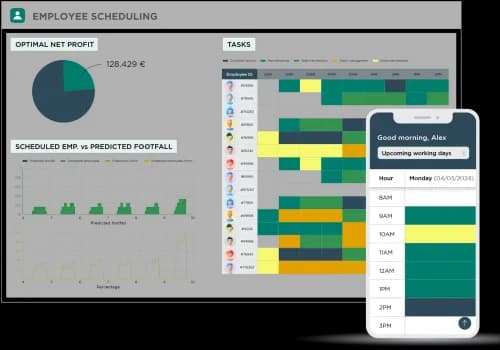
30% staff ratio lifts sales; €500K/year recovered
VideoMay 28, 2025
VideoMay 28, 2025

VideoMay 28, 2025
VideoMay 28, 2025

VideoMay 28, 2025
VideoMay 28, 2025

VideoMay 28, 2025
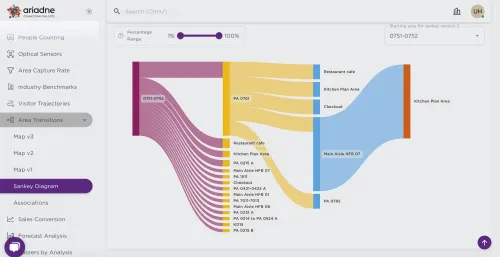
VideoMay 28, 2025
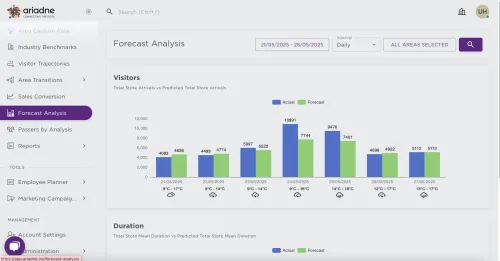
VideoMay 28, 2025
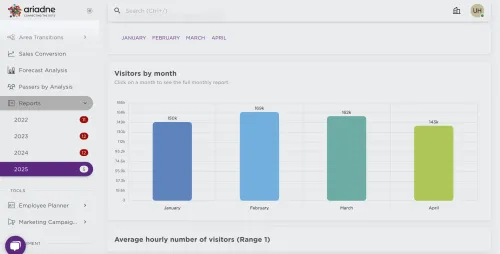
VideoMay 28, 2025

VideoMay 28, 2025
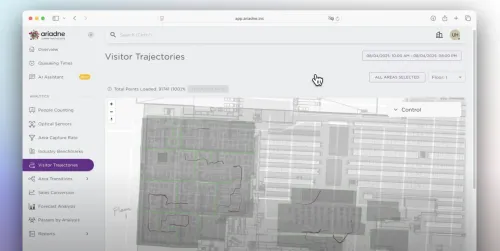
VideoMay 28, 2025
 Stadt Singen
Case studyMay 8, 2025Smart Cities
Real-time analytics across 30+ EU smart cities
VideoApr 3, 2025
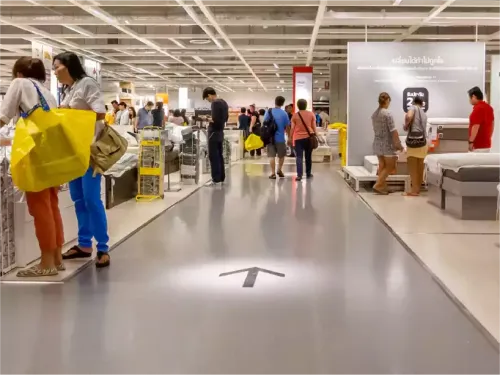
How a multinational furniture retailer uses Ariadne people counting and in-store analytics in its Dutch store. Watch the case study video.
Case studySep 25, 2024Retail Stores
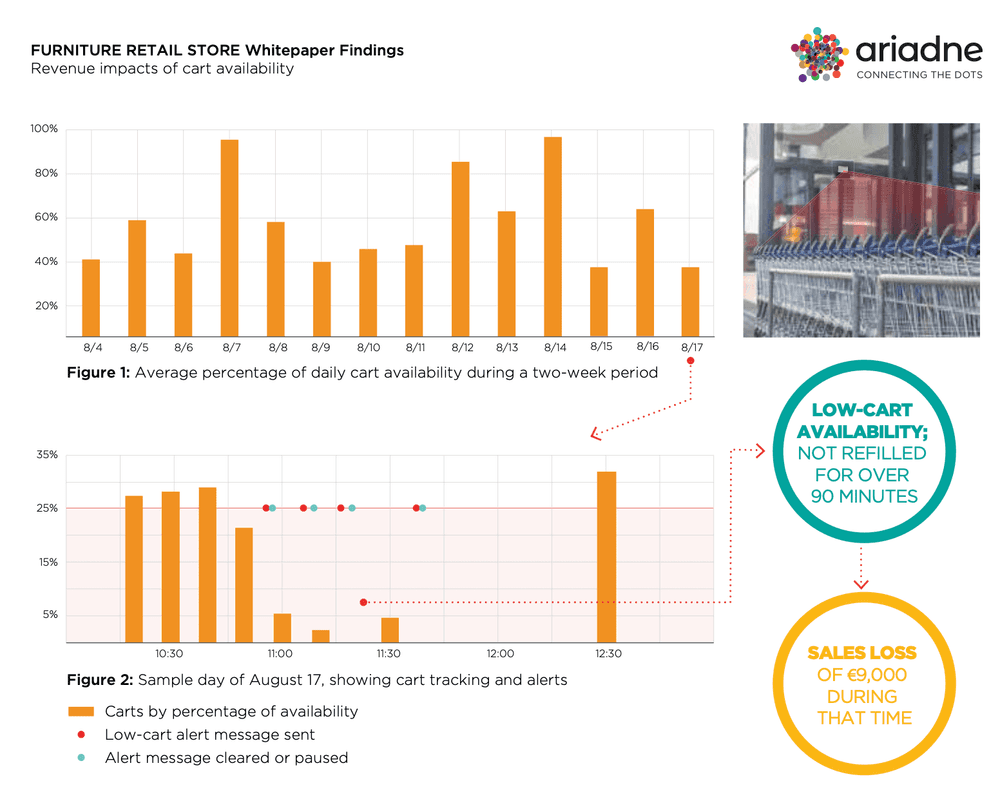
46% higher purchase rate with cart availability
 Intersport
Case studySep 25, 2024Retail Stores
Higher sales via staff allocation and layout data
 Glasgow Airport
Case studySep 25, 2024Airports
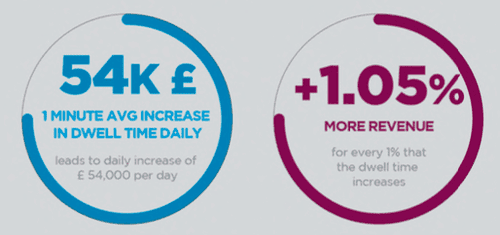
£54,000 daily revenue from passenger insights
Case studySep 25, 2024Shopping Malls
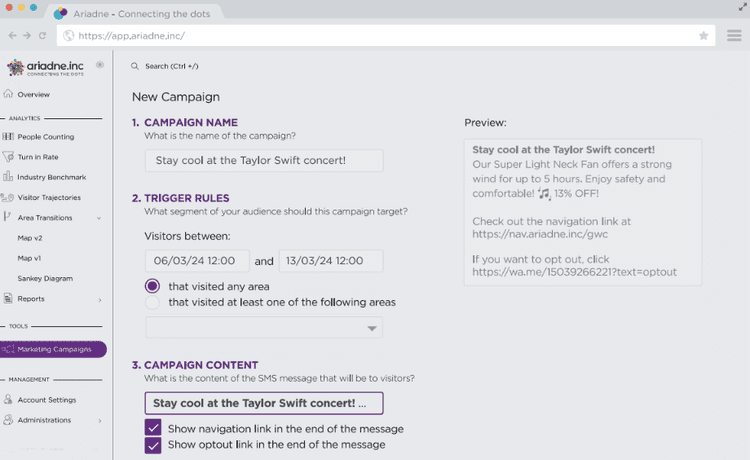
30% store visits during concert SMS campaign
Case studySep 25, 2024Events & Exhibitions
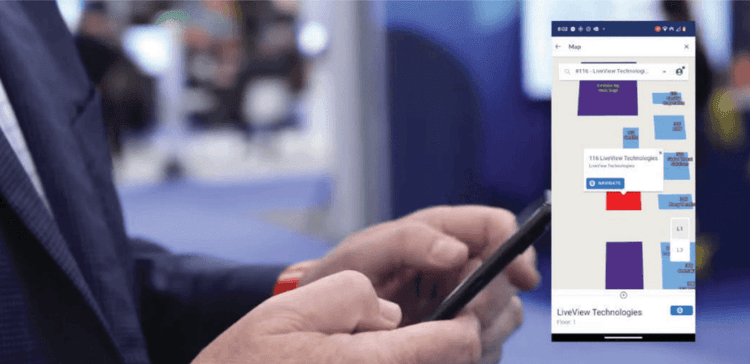
46.3% QR CTR at NRF Big Show, 1,900 visitors

 Watsons
Case studySep 24, 2024Retail Stores
20% traffic lift in one week via cross-promotion