
Die am besten vorrecherchierte Journey im Handel
Niemand betritt einen Elektronikmarkt unschuldig: Die Kundin kommt mit gelesenen Tests, verglichenen Preisen und oft einem konkreten Modell im Kopf. Die Journey im Laden ist deshalb keine Entdeckung, sondern Verifikation: sehen, anfassen, die zwei Fragen stellen, die das Internet nicht beantworten konnte, und den Preis gegen das Telefon in der Hand prüfen. Märkte gewinnen diese Journey, indem sie gut in Verifikation sind, nicht indem sie dagegen kämpfen.
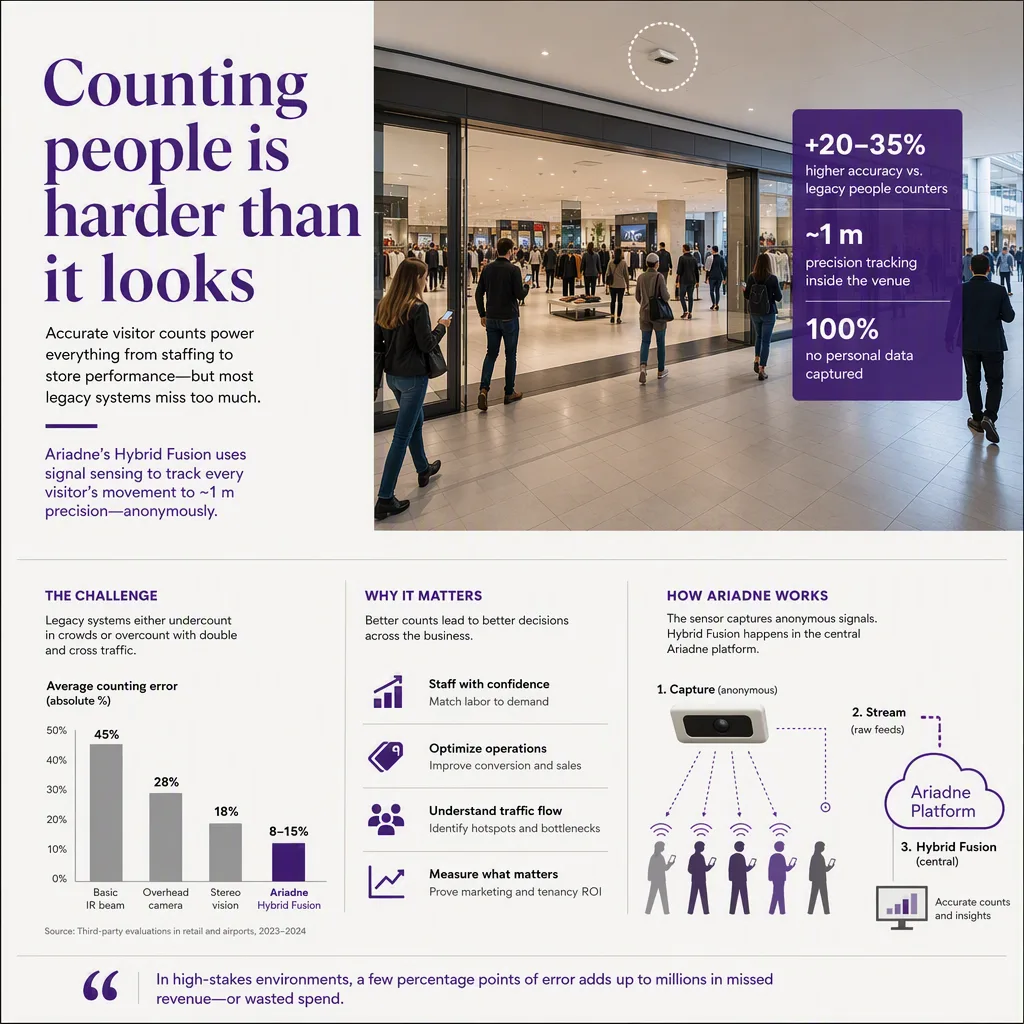
Was definiert die Customer Journey im Elektronikhandel?
Drei Etappenmerkmale. Zieleintritt: Die meisten Journeys steuern direkt eine Zielkategorie an (eine Wand, einen Tisch, ein Demogerät) statt zu stöbern. Demo-Verweildauer: Die entscheidende Etappe ist Hands-on-Zeit mit einem funktionierenden Gerät, messbar als Verweildauer an Demostationen. Personalabhängigkeit: Stärker als in jeder vergleichbaren Branche hängt der Ausgang der Journey daran, ob eine qualifizierte Beratung die Kundin während der Demo-Verweildauer erreicht, denn die verbleibenden Fragen (Kompatibilität, Garantie, Inzahlungnahme, Bestand) sind genau die, für die Personal existiert.
Zieleintritte ändern die Layoutrechnung
Wenn Journeys direkt zu Kategorien laufen, ist der Korridor zwischen Eingang und Ziel Werbefläche, nicht Stöberfläche: Nachbarschaften wirken durch Abfangen (Zubehör am Telefonweg, Kabel an der TV-Wand), nicht durch schlenderndes Entdecken. Gemessene Wege vom Eingang zur Zone zeigen, welche Abfangpunkte Journeys tatsächlich passieren, dieselbe Pfadlogik wie in der Layout-Optimierung im Einzelhandel.
Demo-Verweildauer: die Etappe, die sich bauen lässt
Ein funktionierendes Demogerät verwandelt Anfassen in Vertrauen; ein totes verwandelt eine Journey in einen Abgang. Die Verweildauer an Demostationen ist die zentrale Engagement-Kennzahl der Branche, gelesen gegen den vorbeilaufenden Fluss wie jedes Verweildauer-Frequenz-Paar. Lange Verweildauer ohne Kauf, konzentriert an einer Station, heißt meist: Dort blieb eine Frage unbeantwortet, ein Personalsignal, kein Produktsignal.
Personalabdeckung entscheidet den Abschluss
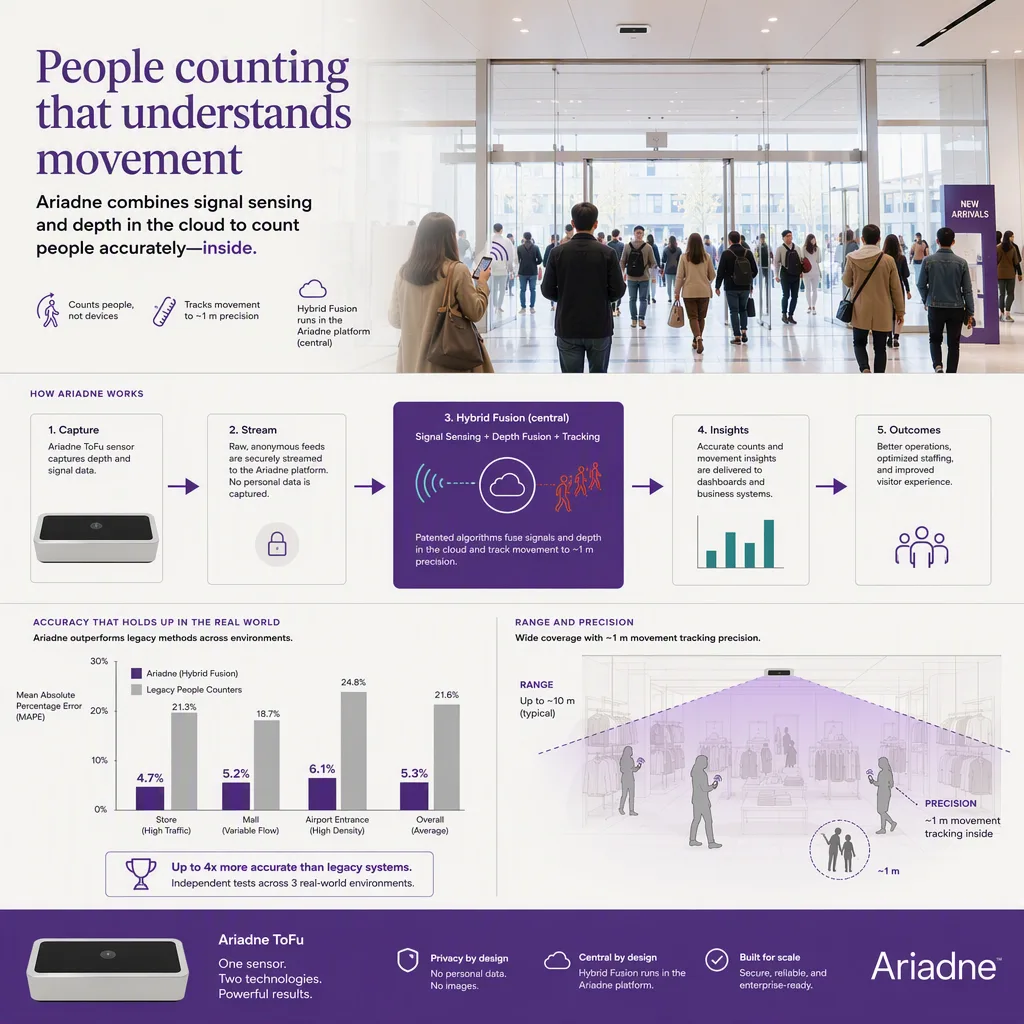
Die messbare Version der "Personalabhängigkeit": Verweildauer-Episoden mit Beraterkontakt gegen solche ohne vergleichen. Die Abdeckung sollte der Demo-Verweildauer folgen, nicht der Tür, und die Planungsmaschinerie dafür existiert in der bedarfsbasierten Personalplanung und dem Personal-Kunden-Verhältnis. Die Showrooming-Angst (im Laden prüfen, online kaufen) ist real, aber asymmetrisch: Der Markt kann es nicht verhindern, nur überbieten, und Service ist ein Abdeckungsergebnis.
Die Journey kamerafrei messen
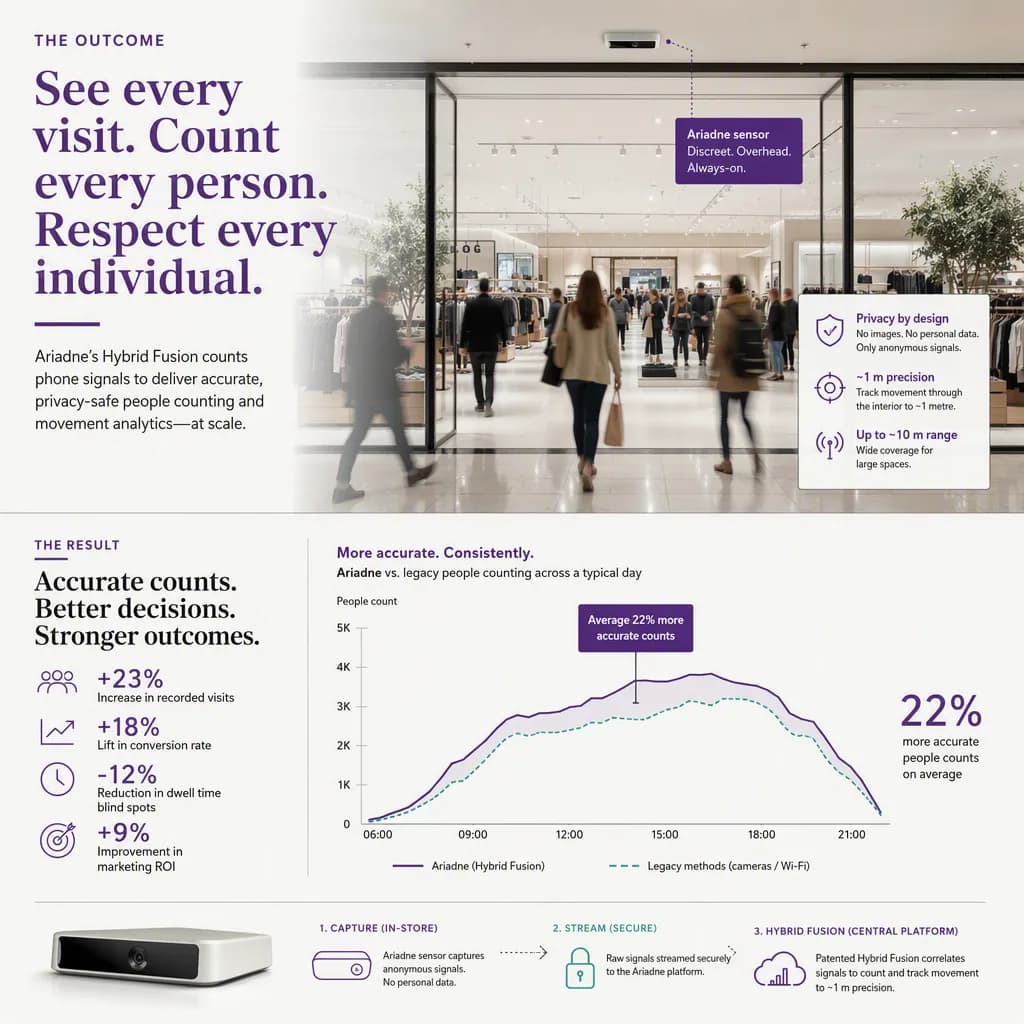
Jede Etappe oben reduziert sich auf Zählwerte, Wege und Verweildauern: Zieleintritte, Stationsverweildauer, Wegschleifen, Schlangenbeitritte. Ariadne misst sie als anonyme Trajektorien, ohne Kameras auf Kunden, die Preise auf ihren Telefonen vergleichen. Die Conversion-Arithmetik steht in der Conversion-Rate-Formel, die Kartierungsmethode im Pillar Customer Journey Mapping.
---


