
Die teuerste Diskussion im Einzelhandel
Der Umsatz fällt, und die Besprechung teilt sich in zwei Lager: Marketing sagt, die Filiale konvertiere die gegebene Frequenz nicht, der Betrieb sagt, es gebe keine Frequenz zu konvertieren. Beide Seiten argumentieren aus derselben Monatsumsatzzahl, die das nicht klären kann, und die Kosten eines Fehlschlusses sind ein Quartal mit der falschen Maßnahme. Zwei Zahlen klären es in Minuten, sofern die Filiale Besuche überhaupt misst.
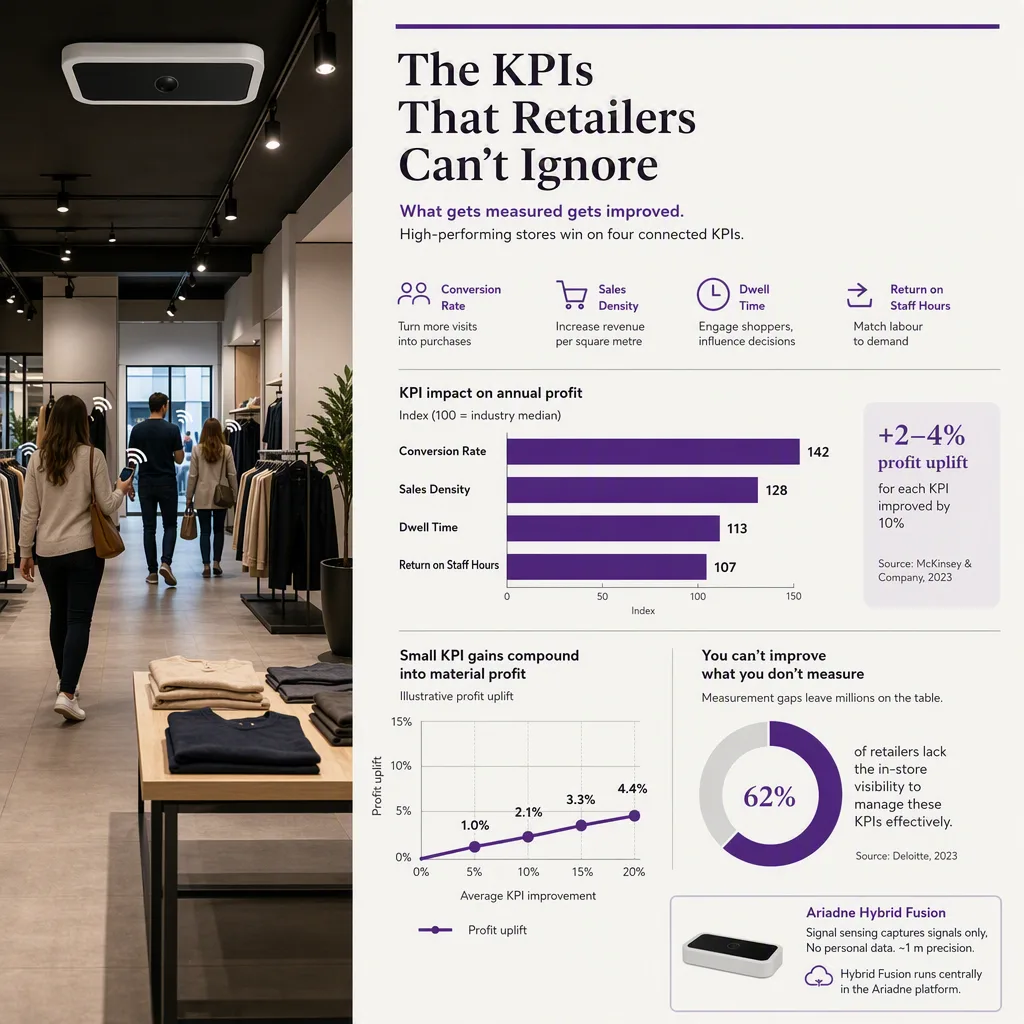
Ist es ein Frequenzproblem oder ein Conversion-Problem?
Besuche und Conversion Rate gegen dieselbe Vorjahresperiode oder die letzte stabile Baseline vergleichen. Besuche runter, Conversion flach ist ein Frequenzproblem: Es kamen weniger Menschen, und die Filiale hat mit den Gekommenen normal gearbeitet. Besuche flach, Conversion runter ist ein Conversion-Problem: Dieselbe Nachfrage kam, und weniger davon kaufte. Beides runter heißt Frequenzproblem, das zusätzlich die Conversion drückt, meist über Unterbesetzung oder gekürzte Zeiten. Beides rauf bei fallendem Umsatz zeigt auf die Warenkorbgröße statt auf eines der beiden, was zu Warenkorb vs. Frequenz und Umsatz pro Besucher führt.
Der Entscheidungsbaum
Zweig 1, Besuche runter, Conversion hält. Die Filiale ist in Ordnung, das Einzugsgebiet oder das Marketing nicht. Die Capture Rate prüfen, um "weniger Menschen kamen vorbei" von "weniger der Vorbeikommenden traten ein" zu trennen, verschiedene Probleme mit verschiedenen Verantwortlichen: Retail Capture Rate und, für die Fassadenhälfte, Window Conversion Rate. Fallende Passantenfrequenz ist eine Lage- und Einzugsgebietsfrage; fallende Capture bei stabiler Passantenfrequenz ist eine Fassaden- und Schaufensterfrage.
Zweig 2, Besuche halten, Conversion runter. Innen hat sich etwas geändert. Den Trichter in Reihenfolge abarbeiten statt zu raten: Hat sich die Zonenreichweite geändert (Layout oder eine verschobene Kategorie), ist das Anprobe-Engagement gefallen (Umkleiden, Demos), sind Schlangen länger geworden, ist die Personalabdeckung in Spitzen gesunken? Die Etappenmethode ist Customer Journey Mapping mit dem KPI-Satz aus Customer-Journey-KPIs und den Hebeln aus Conversion steigern.
Zweig 3, beides runter. Zuerst die Frequenz behandeln, aber sofort die Personalplanung prüfen, denn die Standardreaktion auf fallende Frequenz ist Stundenkürzung, was die Conversion weiter senkt und den Rückgang beschleunigt. Diese Schleife lohnt es, in der Besprechung laut zu benennen.
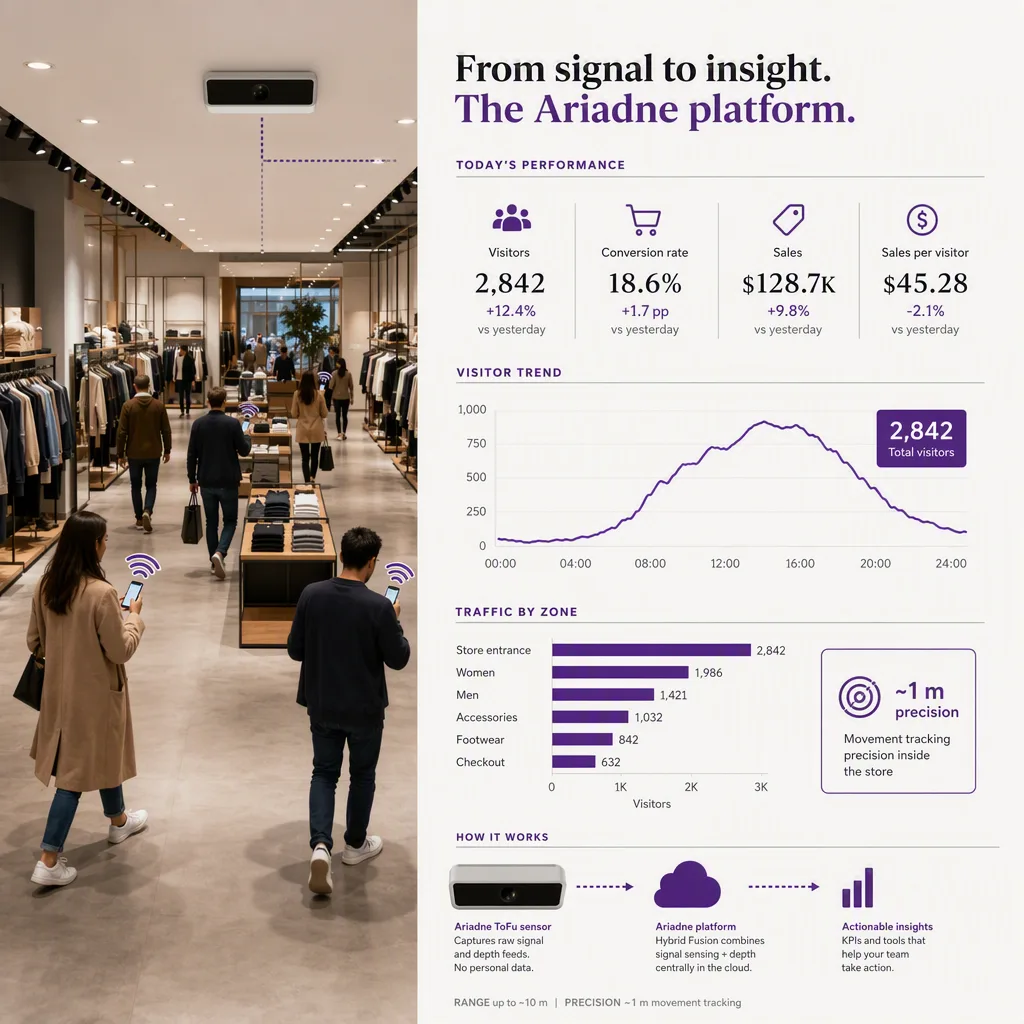
Zweig 4, keines runter, aber Umsatz runter. Conversion und Besuche sind gesund, das Problem ist also, was gekauft wird, nicht ob gekauft wird: Preis, Mix oder Zusatzverkauf.
Bevor Sie der Diagnose trauen, prüfen Sie das Instrument
Jeder Zweig oben hängt daran, dass die Besuchszahl echt ist. Drei Fehlermodi erzeugen falsche Diagnosen: nicht ausgeschlossene Personalbewegungen, die Besuche aufblähen und die Conversion drücken (Personalausschluss); eine unbemerkte Zähldrift, die aus einem Kalibrierungsproblem einen Trend macht (Kalibrierung und die Erkennung stiller Fehler in Wartung und SLA); und ein Vergleichsfenster, das Wochentag oder Saisonform ignoriert (Wochentagsfrequenz). Das ausschließen, bevor jemand eine Fläche umbaut.
Als Standardbericht fahren, nicht als Feuerwehrübung
Die Diagnose ist monatlich wertvoller als in der Krise, denn beide Zweige sind früh billiger zu beheben. Eine Standardansicht aus Besuchen, Conversion und Capture Rate pro Filiale, gemeinsam statt getrennt gelesen, erkennt die Divergenz im Monat ihres Beginns. Formel und Lesedisziplin stehen in der Conversion-Rate-Formel, und wie eine belastbare Baseline aussieht in Benchmarks zur Conversion Rate.
Wo Ariadne einzuordnen ist
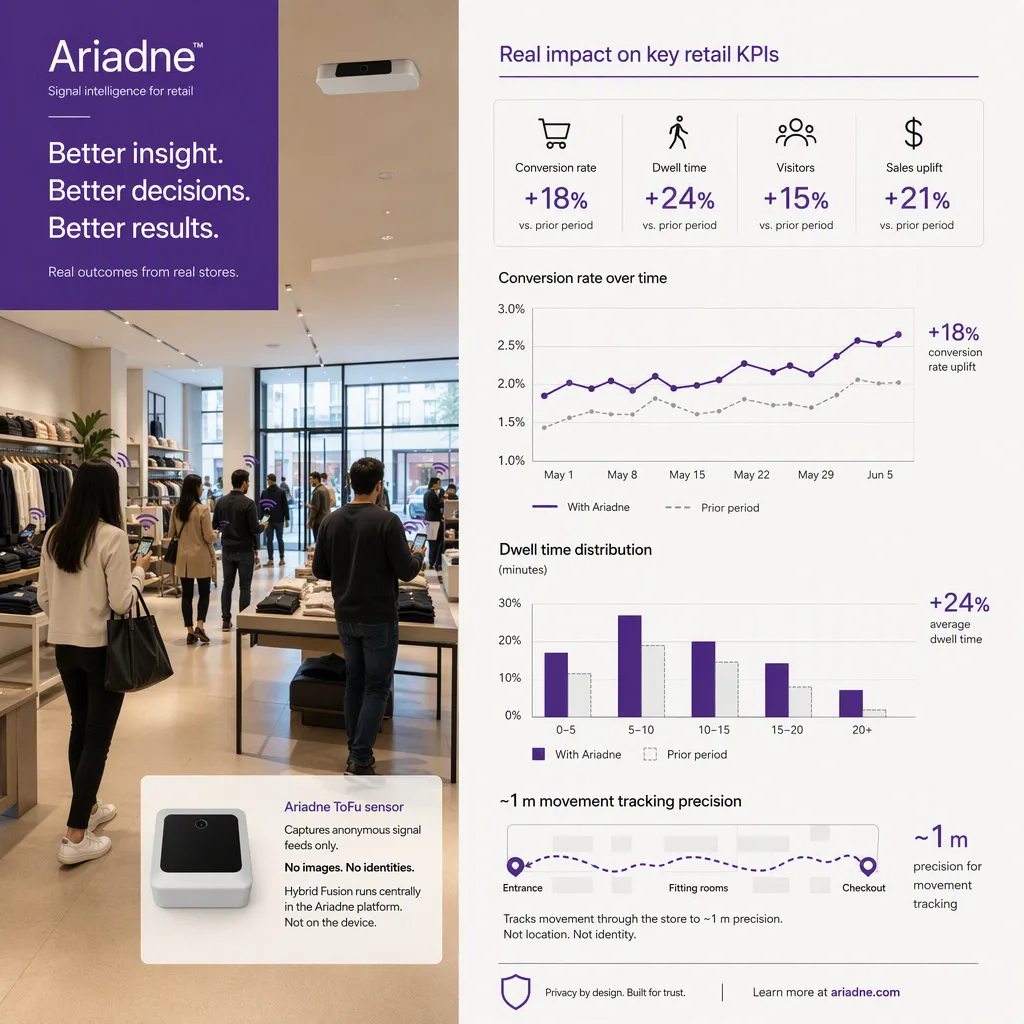
Die Diagnose braucht drei gemessene Zahlen (Passantenfrequenz, Besuche, Transaktionen), und die meisten Filialen haben nur die dritte. Ariadne liefert die ersten beiden kamerafrei, und genau das macht aus dieser Diskussion eine Zwei-Minuten-Prüfung.


