
One customer, two measurement worlds
The customer does not experience channels; the retailer does. A shopper researches on the site, checks stock on the app, tries in store, orders online, and collects at the counter, one journey to them, five systems to the retailer. The classic answer to unification is identity: track the person across every touchpoint. The workable answer for the physical side is different, and better than its reputation.

What technology unifies digital and in-store customer journeys?
Two complementary layers. Identity-based unification where the customer authenticates voluntarily: accounts, loyalty, click-and-collect orders, and returns are moments where the shopper self-identifies and the channels join honestly. Aggregate unification everywhere else: anonymous in-store journey measurement (entries, paths, dwell, conversion) aligned with digital-side data by time, place, and campaign rather than by person. The seam moments carry the identity; the floor data stays anonymous; the analysis joins them at the aggregate level, where the strategic questions actually live.
The seams: where channels meet measurably
Click-and-collect is the flagship seam: a digital order becomes a physical visit with a known time window, and the in-store question (does the collection journey pass anything worth buying, or dead-end at a counter by the door) is a layout decision measurable as attach behavior. Returns are the same seam in reverse, an online sale creating a store visit. Post-visit digital contact is the third seam, with its own timing discipline covered in post-visit push notification timing and its consent-first framing in entry-based loyalty.
Aggregate alignment answers the strategic questions
Did the campaign move store visits? Compare measured footfall in exposed periods and catchments against baselines, the method of billboard footfall attribution applied to any channel. Do store visits follow web research? Watch category-zone traffic against category page-view curves. Is the store earning its role in the funnel? Offline vs online journey measurement sets up that comparison properly. None of these questions needs a single identified shopper; they need trustworthy aggregates on both sides.
Why not just identity-stitch everything?
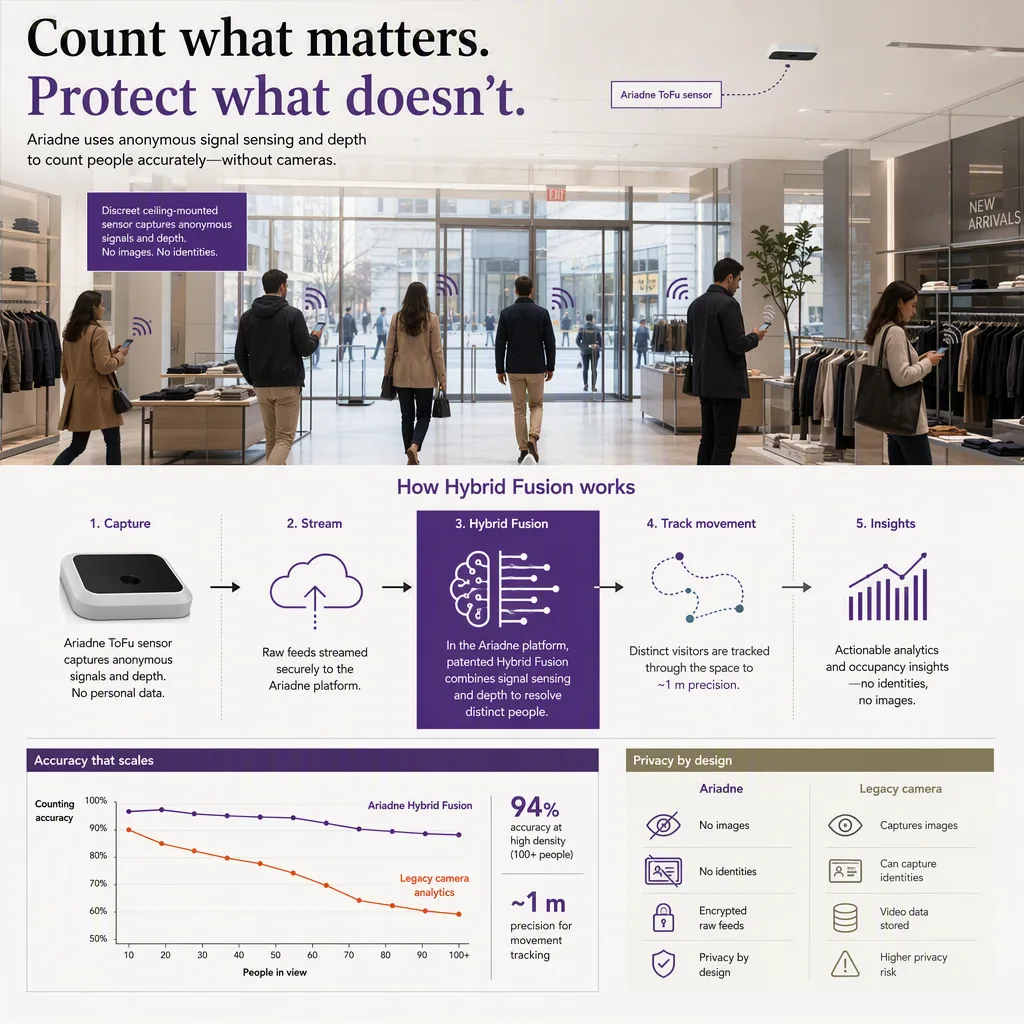
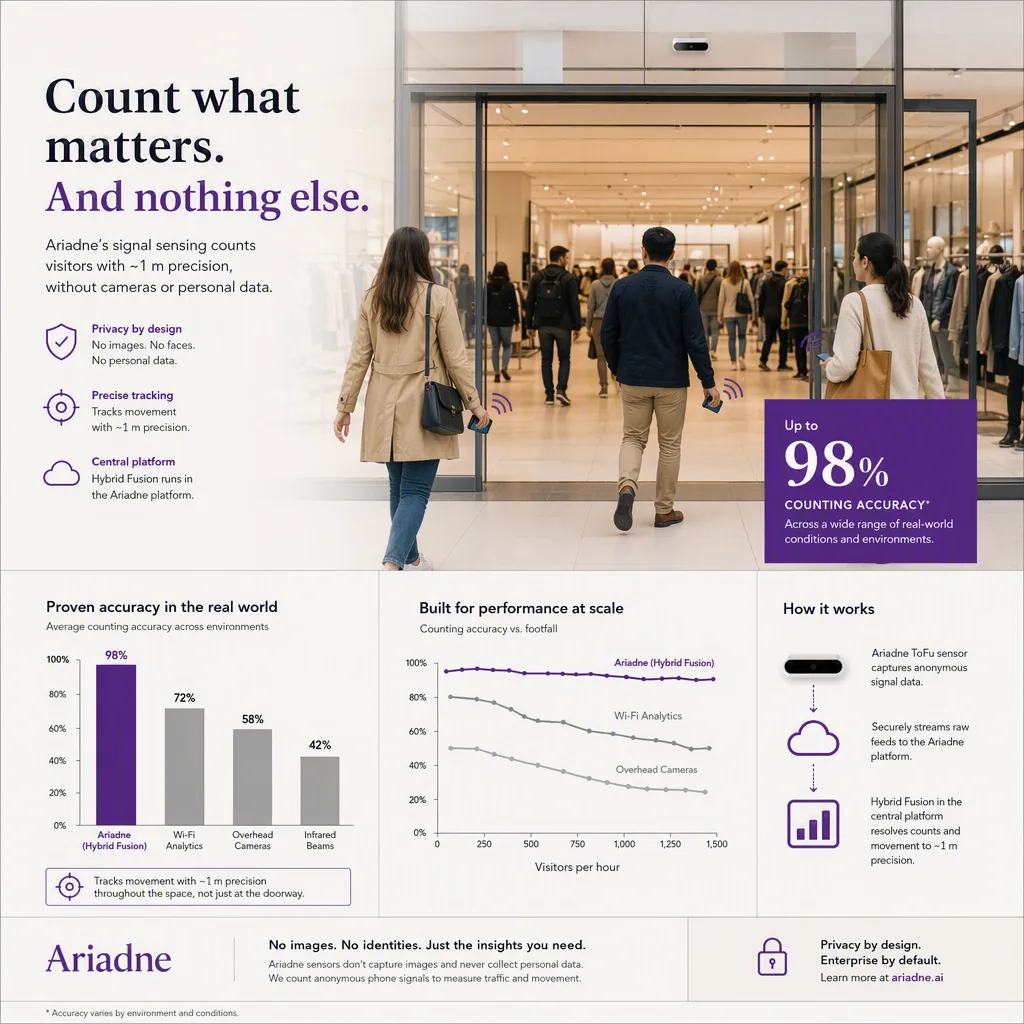
Because the cost curve runs the wrong way: cross-channel identity for every visitor means consent infrastructure, data-protection exposure, and works-council negotiation, in exchange for precision most strategic decisions do not use. The identity-rich seams already exist where customers volunteer them. Ariadne's floor measurement is anonymous by construction (journeys, never identities), which is exactly what lets it sit next to digital analytics without importing digital's consent problem.
Where to start
Instrument the store to journey grain first (the pillar method: customer journey mapping), align time and place with the digital stack second, and treat the authenticated seams as the only identity joins. That order produces a unified picture in weeks and keeps every later privacy review boring.
---


