
Die Wartungsrechnung, die Navigationsprojekte tötet
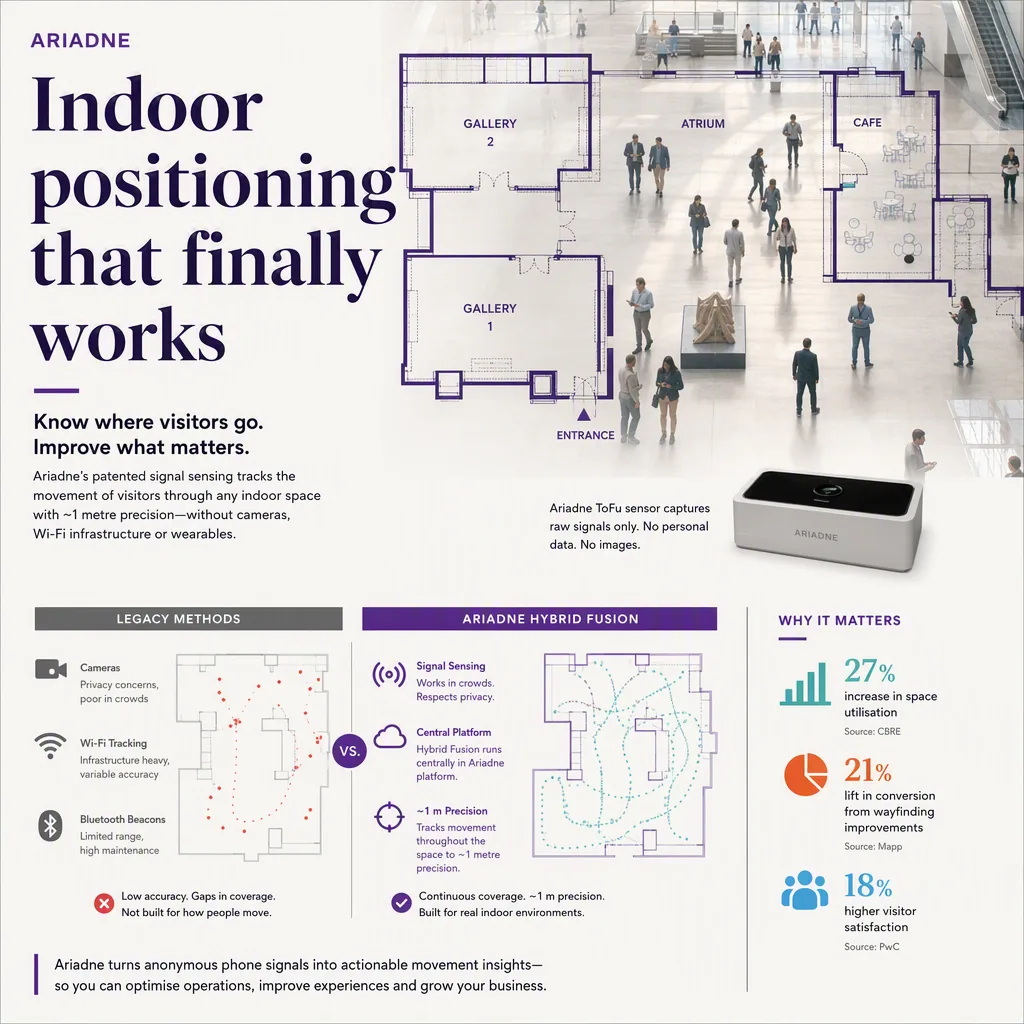
Das schmutzige Geheimnis der Indoor-Navigation ist nicht Genauigkeit, sondern Wartung. Die klassische Architektur tapeziert das Gebäude mit Bluetooth-Beacons, und jeder Beacon ist eine Batterie mit Ablaufdatum, ein zu verhandelnder Montagepunkt und ein zu prüfendes Gerät. Flotten von Tausenden driften in Teilausfälle, die Positionierung verschlechtert sich still, und das Projekt, das mit Pressemitteilung startete, stirbt drei Jahre später an operativer Ermüdung. Infrastrukturfreie Ansätze existieren genau wegen dieser Rechnung.
Was bedeutet Indoor-Navigation ohne Infrastruktur?
Navigation, deren Positionierung ohne Installation und Wartung einer dedizierten Hardwareschicht pro Zone funktioniert: keine Beacon-Flotte, kein Batteriewechselzyklus, kein Hardware-Audit pro Korridor. Positionierung leitet sich stattdessen aus dem ab, was Gebäude und Endgerät bereits liefern (vorhandene Funkumgebung, Gerätesensorik, kartenabgeglichene Bewegung), wobei der Aufwand des Standorts in einen genauen, lebenden Grundriss geht statt in Hardwarepflege. Der Trade-off ist Positionierungspräzision am Rand, und der ehrliche Vergleich über das ganze Technologiefeld steht in dem Vergleich der Indoor-Positionierungstechnologien.
Die ehrliche Trade-off-Tabelle
Beacon- und UWB-Installationen kaufen Präzision mit Infrastruktur: UWB liefert insbesondere exzellente Genauigkeit und bezahlt sie mit Ankern, Verkabelung und Kosten, das Profil aus UWB-Indoor-Positionierung und BLE-Beacon vs. UWB. Infrastrukturfrei kauft Nachhaltigkeit mit moderater Präzision am Rand. Die entscheidende Frage ist, was der Anwendungsfall braucht: Ein Lagerroboter braucht Zentimeter; ein Mensch, der einer Route folgt, muss wissen, in welchem Korridor er ist und wann er abbiegt, eine Schwelle, die kartenabgeglichene, sensorgestützte Positionierung ohne Hardwareschicht erreicht. Zentimeter-Infrastruktur zu kaufen, um Welcher-Korridor-Fragen zu beantworten, ist der Weg, auf dem Projekte teuer, fragil und eingestellt enden.
Wohin der Aufwand des Standorts wirklich geht
Infrastrukturfrei heißt nicht aufwandsfrei; es verlagert den Aufwand in die Karte. Der Grundriss wird das tragende Asset: vollständig, aktuell und semantisch reich (Eingänge, Aufzüge, stufenlose Wege, Raumverzeichnisse). Diese Arbeit zahlt sich mehrfach aus, weil jede Oberfläche (App, Web, Kioske, Signage) dieselbe Karte konsumiert, und der Aktualisierungs-Workflow (BIM-zu-Wegeleit-Pipelines für Standorte mit Modellen, Kartendatenstandards für den Austausch) ersetzt das Beacon-Audit als operative Routine, zu einem Bruchteil der Kosten.
Die Datenschutzdividende
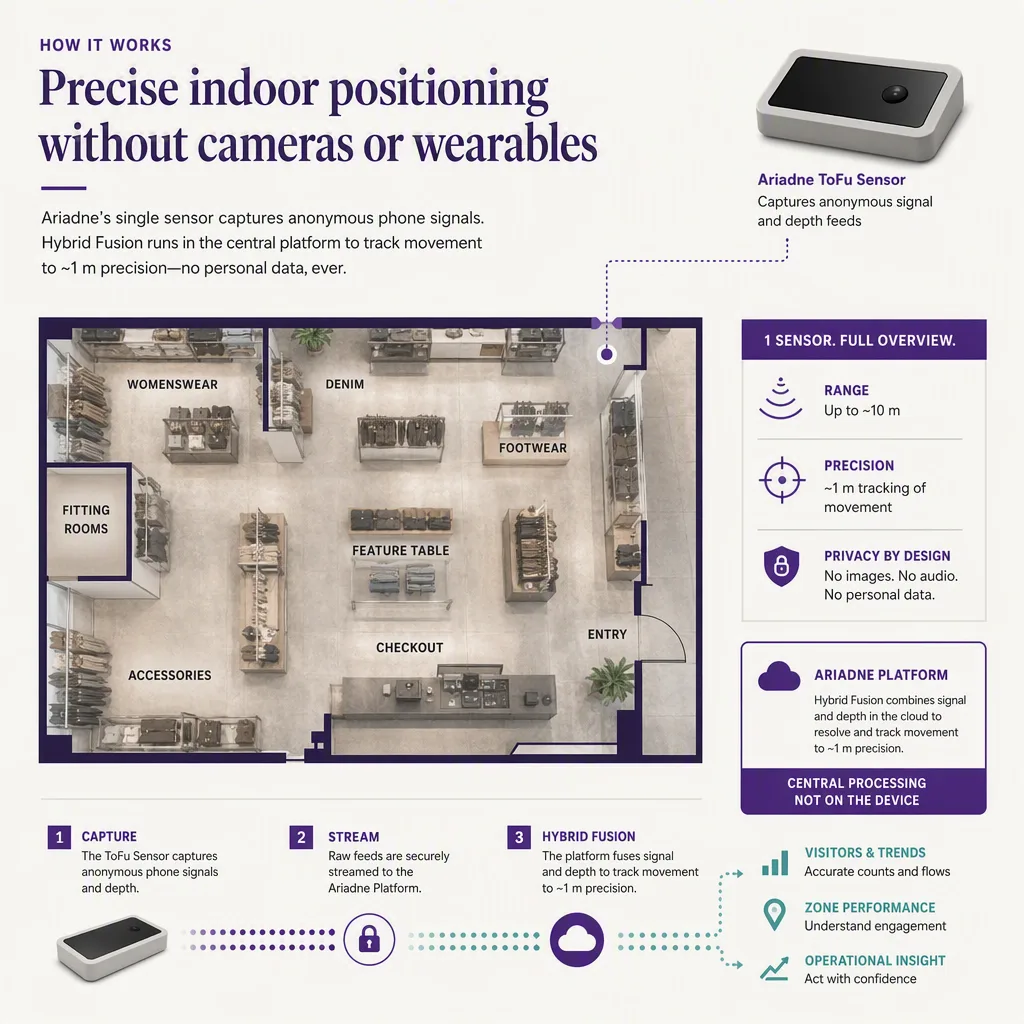
Ein Positionierungsansatz, der niemals Geräte oder Identitäten inventarisiert, ist auch der Ansatz, der die Datenschutzprüfung am schnellsten übersteht: In der Führungsschicht wird nichts Personenbezogenes erhoben, die Architektur aus Datenschutz bei Indoor-Positionierung. Standorte, die eine Schlacht über Kameraanalytik geführt haben, schätzen es, keine zweite über Navigation zu beginnen.
Wo Ariadne einzuordnen ist
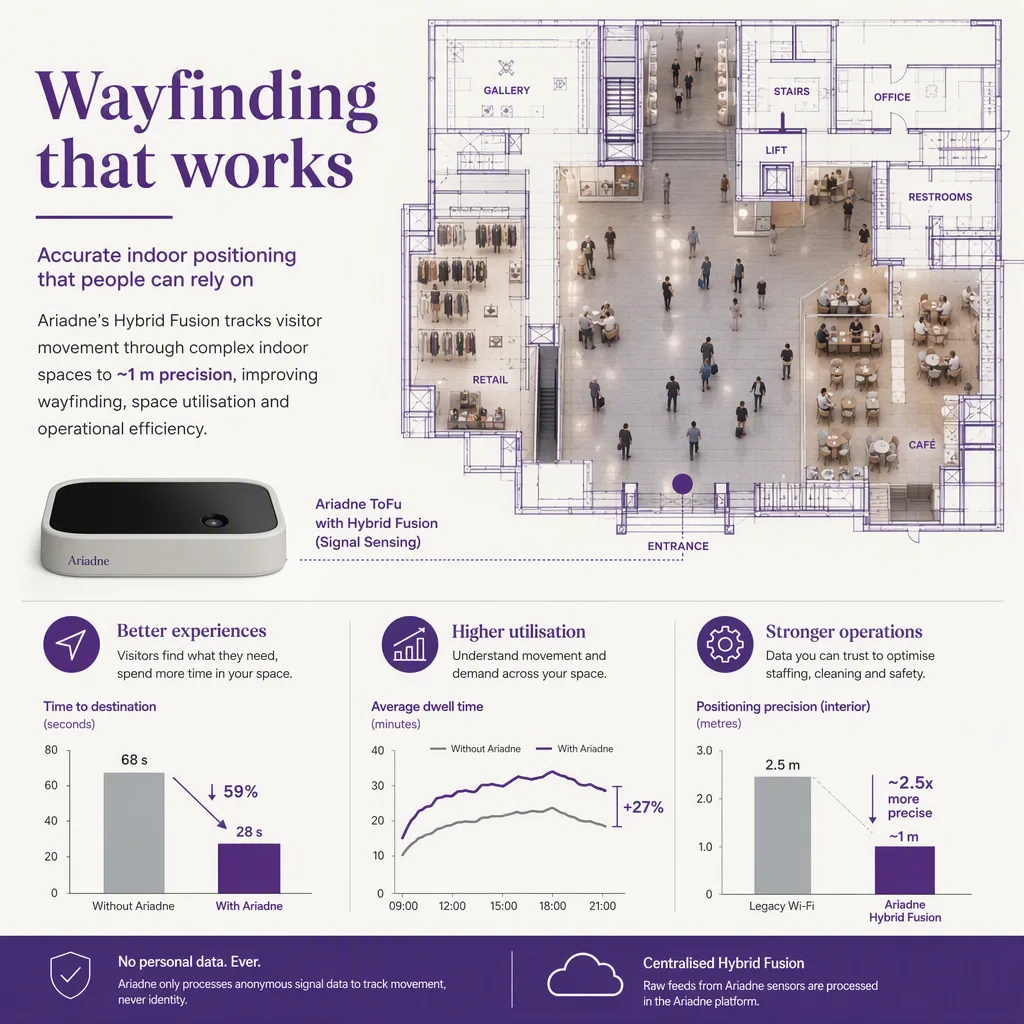
Ariadnes Wegeführung ist auf dieser Philosophie gebaut: Grundrisse in Live-Führung über App, Web, Kioske und Signage, datenschutzfreundliche Positionierung, keine Hardwareflotte pro Zone zu pflegen, eingesetzt in Standorten von Glasgow Airport bis zu den Frankfurter und Stuttgarter Centern aus dem Indoor-Navigation-Pillar.
---


