
Daten, die nicht heraus können, sind Daten, die nicht wirken
Ein Zählsystem verdient sein Budget, wenn seine Zahlen dort ankommen, wo entschieden wird: im BI-Stack, den die Geschäftsführung liest, im Dienstplansystem, das Schichten setzt, in den Mieterberichten, im Open-Data-Portal. Ein System, dessen Zahlen nur im eigenen Dashboard leben, produziert interessante Screenshots und keine Verhaltensänderung. Integration ist damit keine technische Fußnote der Spezifikation, sondern die Klausel, die entscheidet, ob der Kauf etwas bewirkt.
Welche Integrationsanforderungen gehören in eine Zählausschreibung?
Fünf, konkret formuliert. Eine API mit dokumentierten Endpunkten, Authentifizierung, Rate Limits und Zugriff auf Historie (nicht nur die aktuelle Periode). Massenexport in einem dokumentierten Format über das gesamte Speicherfenster. Ein benannter Pfad in Ihre BI- oder Warehouse-Schicht. Benannte Integrationen mit den operativen Systemen, die Sie tatsächlich betreiben, Personalplanung insbesondere. Und Webhook- oder Push-Fähigkeit, wenn ein Ablauf nahezu Echtzeitwerte braucht, etwa Belegungsgrenzen oder Schlangenalarme.
Die Anforderungen, die Beschaffer vergessen, bis es weh tut
- Historienzugriff über die API, nicht nur Live-Werte. Analystinnen müssen nachfüllen; eine nur im Dashboard vorhandene Historie heißt, dass jede Analyse beim Werkzeugwechsel neu beginnt.
- Granularität in der API passend zur Granularität im Dashboard. Anbieter exponieren gelegentlich Tagessummen über die API und zeigen Stundenkurven in der eigenen Oberfläche, was genau die Personalarbeit blockiert, für die die Daten gekauft wurden.
- Zonen- und Standort-Metadaten, damit Ihre Systeme Zähldaten mit Ihrer eigenen Hierarchie (Region, Filiale, Tür) verbinden können, ohne eine manuelle Zuordnungstabelle, die verrottet.
- Identität der Daten, nicht der Menschen. Die Integration sollte Standort- und Zonenkennungen tragen, nie Besucherkennungen, was sowohl eine Datenschutzeigenschaft als auch eine architektonische Vereinfachung ist. Die Klauselsprache steht in Datenschutzklauseln im Vertrag.
Personalsysteme sind die wertvollste Integration
Die Zählintegration mit dem schnellsten Rückfluss geht meist in die Dienstplanung, denn Frequenzkurven übersetzen sich direkt in Schichtentscheidungen und Personalkosten. Die Mechanik dieser Verbindung behandelt WFM-Integration über APIs, die Bedarfslogik bedarfsbasierte Personalplanung und die Kurzfristprognose die 4-Stunden-Frequenzprognose. Als benannte Anforderung mit Ihrem tatsächlichen WFM-Produkt im Satz festschreiben; "integriert mit gängigen Systemen" ist keine Anforderung, sondern eine Prospektzeile.
Auch nach den Fehlermodi fragen
Drei Fragen trennen eine echte Integration von einer Demo: Was passiert, wenn ein Sensor offline geht (meldet die API eine Lücke oder interpoliert sie still, und ist der Unterschied erkennbar), wie werden nachträgliche Korrekturen behandelt (eine Nachzählung, die die Zahl von gestern ändert, muss nachgelagert sichtbar sein), und wie ist die Versionierungspolitik für Breaking Changes. Beschaffer, die das fragen, bekommen bessere Systeme; die anderen erfahren die Antworten beim ersten Quartalsabschluss.
Wo Ariadne einzuordnen ist
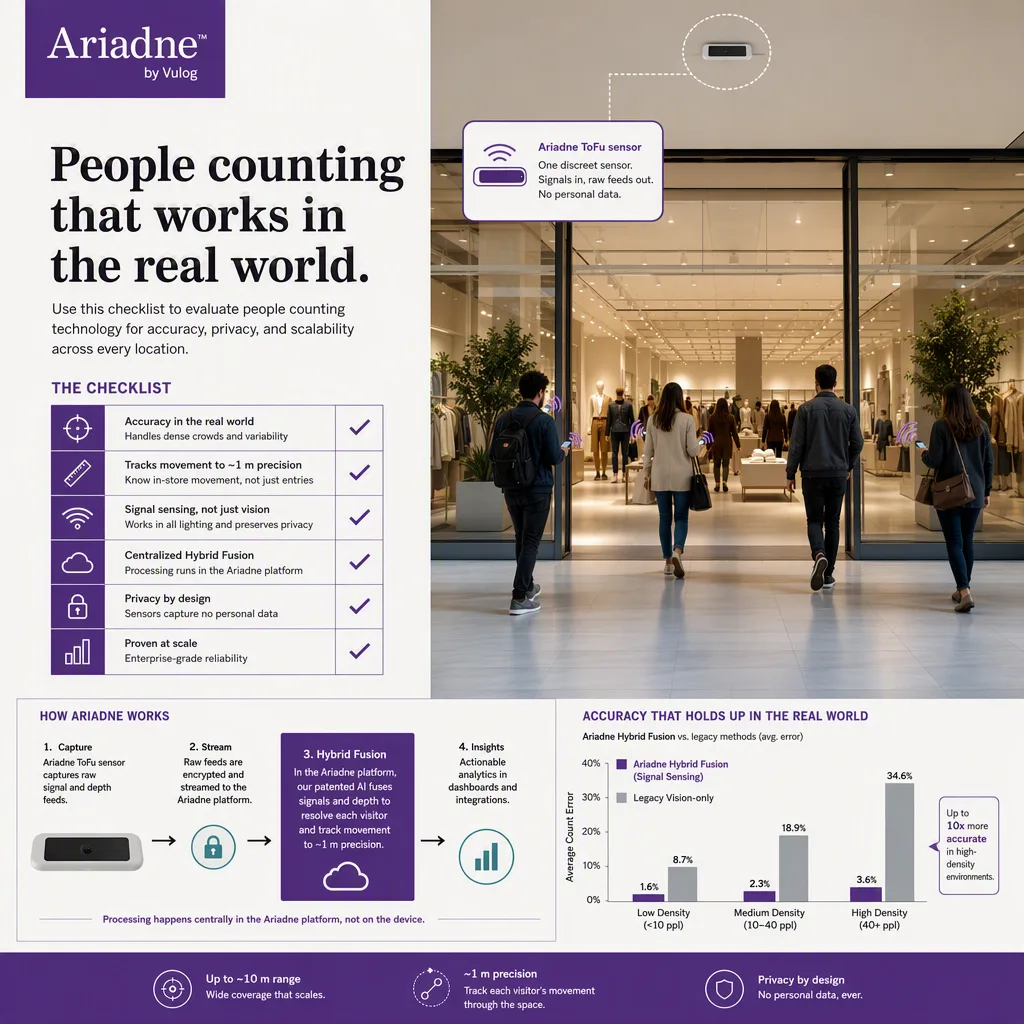
Ariadne ist darauf gebaut, von anderen Systemen gelesen zu werden: Zählwerte, Verweildauern und Zonenwege für den BI- und Betriebs-Stack, mit Standort- und Zonenkennungen und ohne Besucherkennungen irgendwo in der Nutzlast, weil keine erfasst werden. Der weitere Fragenkatalog steht in der RFP-Vorlage, das Feed-Muster für Medienanwendungen in Frequenzdaten an DSPs.
# Program 3, Cluster 5 (Beschaffung / Spezifikation / RFP) DE drafts: Part C (rows 252-254)
Status: DE mirrors of the approved EN drafts.
Author: Govarthan.
---


