
Das Büro ist nicht mehr merkbar
Wegeführung im Büro mit festen Plätzen war gelöst: Man lernte die Etage einmal. Hybrides Arbeiten hat das gebrochen. Desk-Sharing heißt, der heutige Platz ist dort, wo die Buchungssoftware ihn hingelegt hat; Team-Nachbarschaften werden neu gemischt; Besprechungsräume vermehren sich und verstecken sich; und die Kollegin, die man braucht, ist zwei Tage pro Woche im Haus, Ort unbekannt. Das moderne Büro wird navigiert, nicht memoriert, und Unternehmen entdecken, dass sie Wegeführung für ihre eigenen Leute brauchen, nicht nur für Gäste.
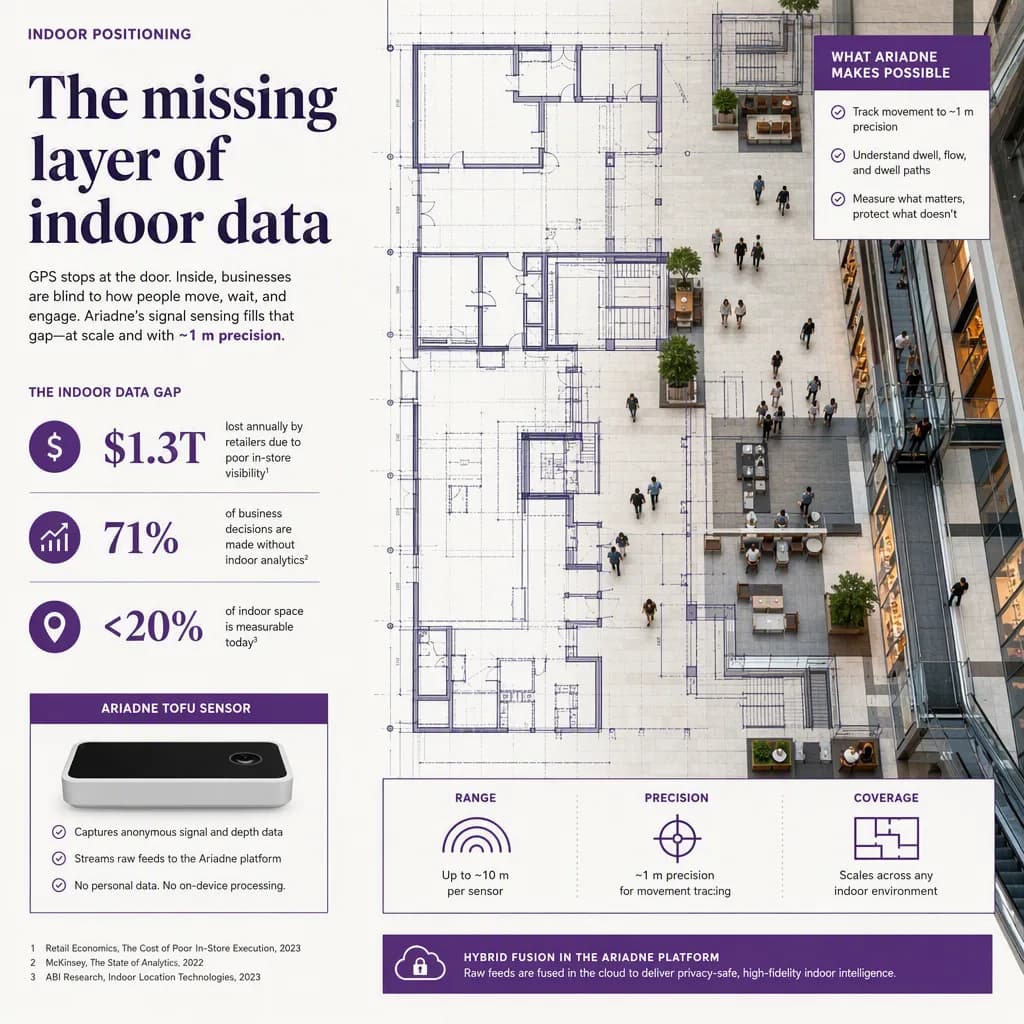
Was gehört zur Wegeführung im Büro?
Raumfindung (die Einladung trägt eine Route, nicht nur einen Namen), Schreibtischfindung (vom gebuchten Platz zur Position auf der Etage), Amenity-Routing (Schließfächer, Erste Hilfe, Ruheräume, Drucker), Besuchermodus (Empfang zum Besprechungsraum ohne Begleitung) und, wo die Belegschaft es akzeptiert, Kollegenfindung auf Basis freiwilliger Anwesenheitsfreigabe statt Überwachung. Die Ausliefer-Oberflächen spiegeln jeden anderen Standort: Web- und App-Routen plus Screens an Aufzugslobbys und Etageneingängen.
Die Datenschutzlinie entscheidet die Architektur
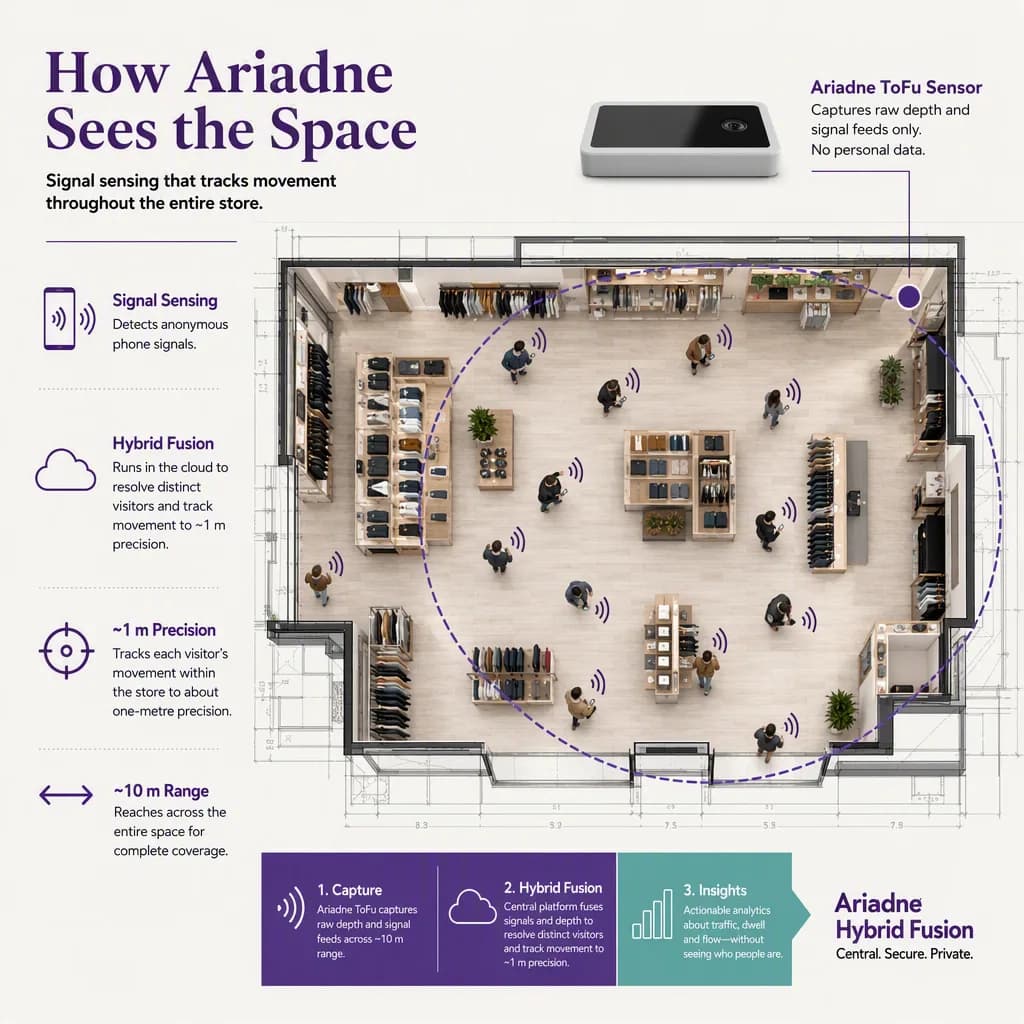
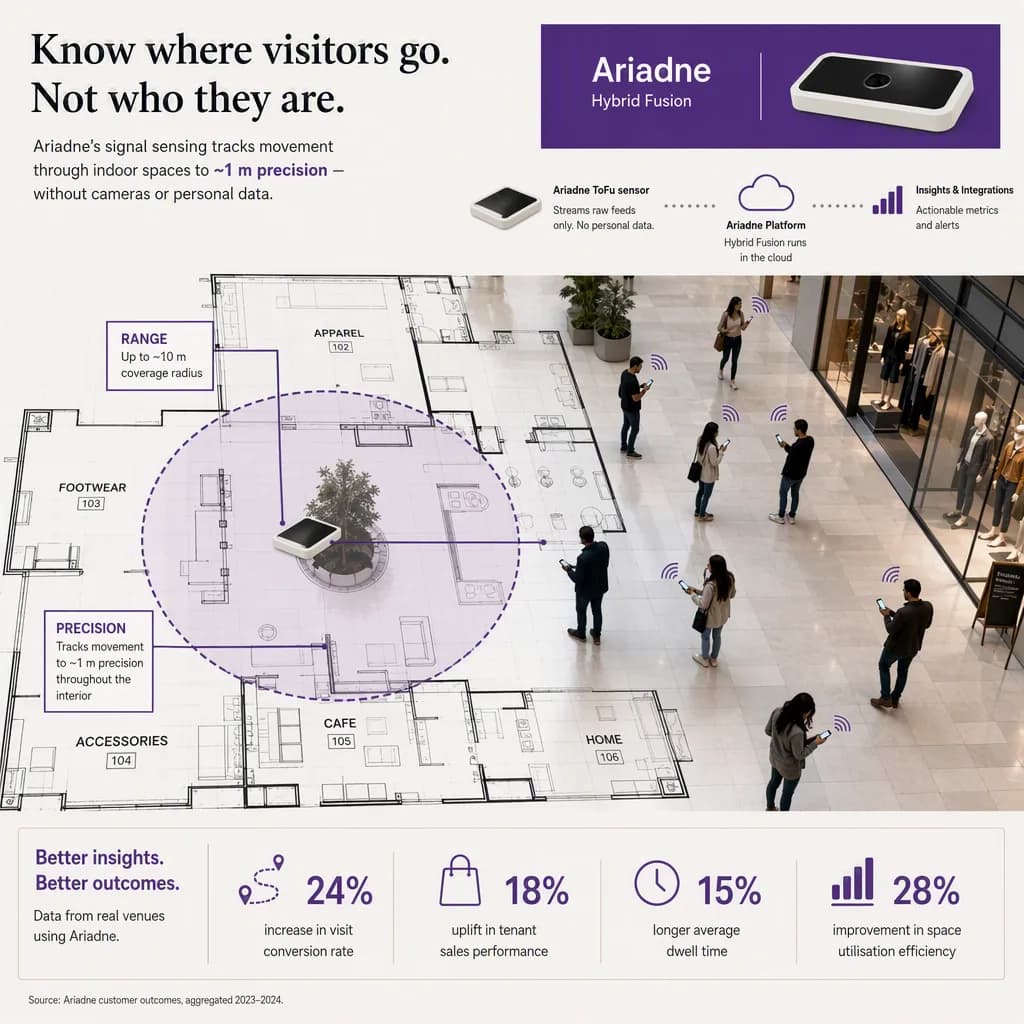
Büronavigation stirbt in der Betriebsratsprüfung, wenn sie als verkappte Mitarbeiterüberwachung ankommt. Die Trennung, die die Prüfung übersteht: Die Führungsschicht beantwortet "wie komme ich zu Raum 4.12", ohne zu wissen, wer fragt, und die Belegungsanalytik beantwortet "wie voll ist Etage 4" als Zählwerte, nie als benannte Badges. Aggregierte, identitätsfreie Belegungsmessung (der Ansatz aus Büro-Belegungsanalytik) gibt dem Facility Management jede Planungszahl, die es braucht; Kollegenfindung, falls gewünscht, läuft über ausdrückliches Opt-in, nicht über Positionierungsinfrastruktur, die still Beschäftigte protokolliert. Diese Trennung, Führung ohne Identität, ist dasselbe Argument des eingebauten Datenschutzes wie in Datenschutz bei Indoor-Positionierung.
Der Facility-Gewinn ist die Messschicht
Dieselben Daten, die Menschen routen, zeigen, wie das Gebäude arbeitet: welche Etagen und Nachbarschaften sich tatsächlich füllen, um welche Raumcluster gekämpft wird, während andere leer stehen, wie Besucher vom Empfang fließen, wo sich die Kaffeepunkt-Trauben bilden. Für ein Unternehmen, das Innenstadtmieten für ein halb belegtes Gebäude zahlt, ist diese Messung die stille zweite Budgetzeile des Wegeleitprojekts, und oft die, die es bezahlt. Die Auslastungsmethode überträgt sich aus der Auslastung von Gemeinschaftsflächen.
Einkaufshinweise speziell für Büros
Der Aktualisierungs-Workflow zählt hier mehr als in jedem öffentlichen Gebäude, weil Bürolayouts sich monatlich ändern (Umzüge, Wachstum, Untermiete): Die Karte muss vom Facility Management bearbeitbar sein, nicht über eine Ticketschlange beim Anbieter. Integration mit Raum- und Deskbuchung ist der Unterschied zwischen Karte und Werkzeug. Und infrastrukturarme Positionierung erspart Verhandlungen mit dem Vermieter über Bohrlöcher für Beacon-Halterungen in einer gemieteten Decke, der Trade-off aus Indoor-Navigation ohne Infrastruktur.
Wo Ariadne einzuordnen ist
Ariadne liefert grundrissbasierte Live-Führung über App, Web und Screens auf einer datenschutzfreundlichen Positionierungsschicht, die keine Identität trägt, mit Belegung als Zählwert. Für Büros heißt das: Wegeführung, die die Betriebsratsprüfung über ihre Architektur übersteht, nicht über Versprechen; der Plattformüberblick steht in dem Indoor-Navigation-Pillar.
---


