
Buying sensors with public money
Public bodies buy people counting for reasons that are easy to justify and hard to specify: proving library or museum attendance to funders, sizing staff in city offices, measuring pedestrian zones, evidencing transit ridership. The technology decision is the small part. The procurement wrapper, competitive bidding, documented award criteria, privacy review, and a paper trail that survives an audit years later, is where these projects actually succeed or stall.
How do public bodies buy people counting systems?
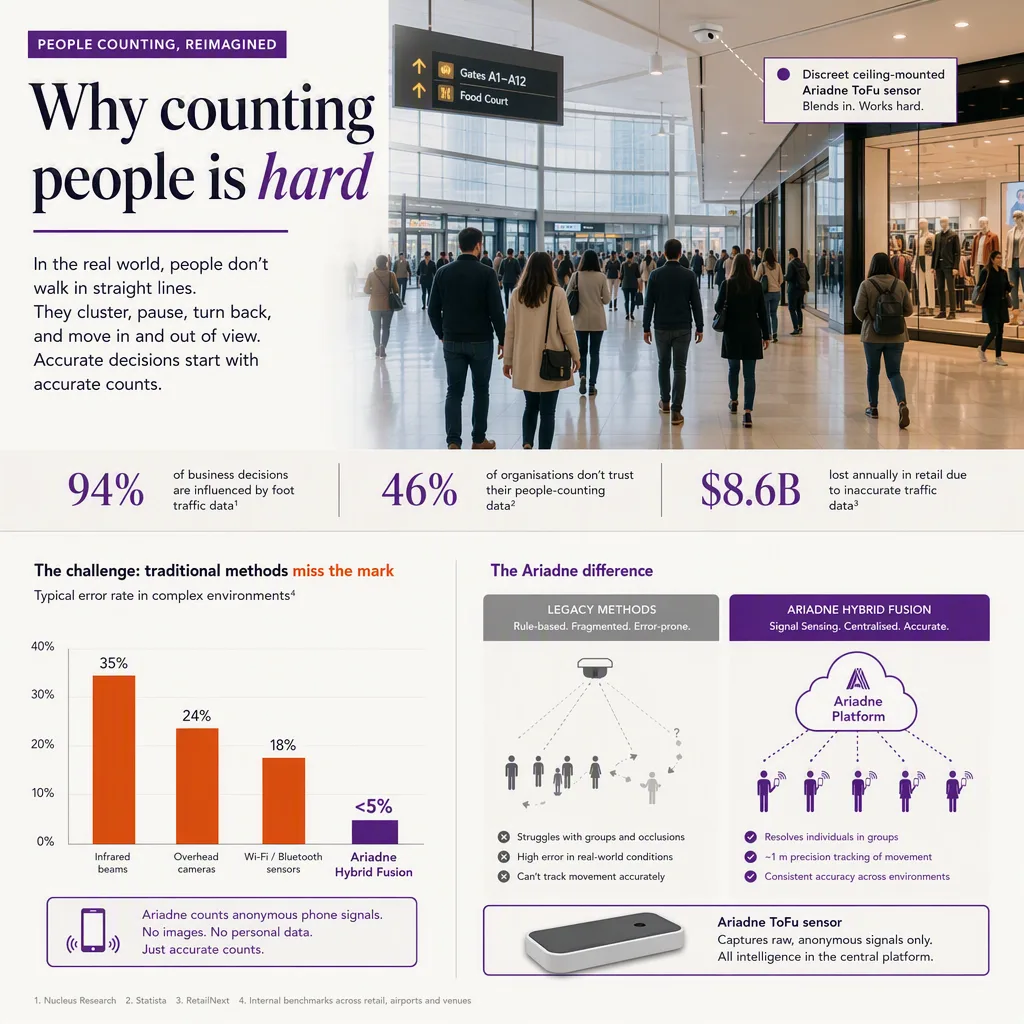
Through the same competitive process as any goods-and-services purchase, with three additions the private sector skips. Award criteria must be written before bids arrive and applied exactly as published, so vague requirements cannot be repaired later by preference. Privacy assessment usually happens before award, not after, which puts sensor technology choice inside the procurement rather than after it. And the record must justify the decision to an auditor who was not in the room, meaning "we liked their demo" is not a defensible reason for anything.
Write the requirement, not the product
The most common failure in public counting tenders is a specification copied from one vendor's datasheet, which either produces a single compliant bid (and an award challenge) or excludes the approach that would have served best. Specify the outcome and the constraints instead: what must be counted, at which points, to what verified accuracy, with what privacy properties, integrating with which systems, maintained under what response times. Every one of those is testable; none of them names a vendor. The question set that makes competing bids genuinely comparable is in the people counting RFP template.
The five requirement blocks that matter
- Measurement scope. Entrances, zones, or both; hours of operation; granularity (hourly is usually the honest floor for staffing decisions).
- Verified accuracy. State that accuracy will be validated on site against a manual ground truth at acceptance, and reference the method rather than trusting a datasheet: accuracy test methodology. How to phrase the number itself is covered in people counting specifications.
- Privacy properties. What the sensor may and may not capture. For public bodies this is the block that decides whether the project clears review at all, and camera-free measurement removes most of the difficulty; the clause language is in contract privacy clauses.
- Integration. Where the data must land: the BI stack, the scheduling system, the open-data portal. Checklist in integration requirements.
- Service. Response times, calibration cadence, and who owns the sensors at end of term: maintenance and SLA expectations.
Budget cycles decide timing, not need
Public buying runs on fiscal calendars, and counting projects tend to arrive as either capital purchases (hardware, one budget line, harder to renew) or multi-year service subscriptions (steadier, but requiring a committed operating line). The five-year comparison is the only fair one across those shapes, worked through in total cost of ownership, and the internal argument that wins either line is in the people counting business case.
Where Ariadne fits
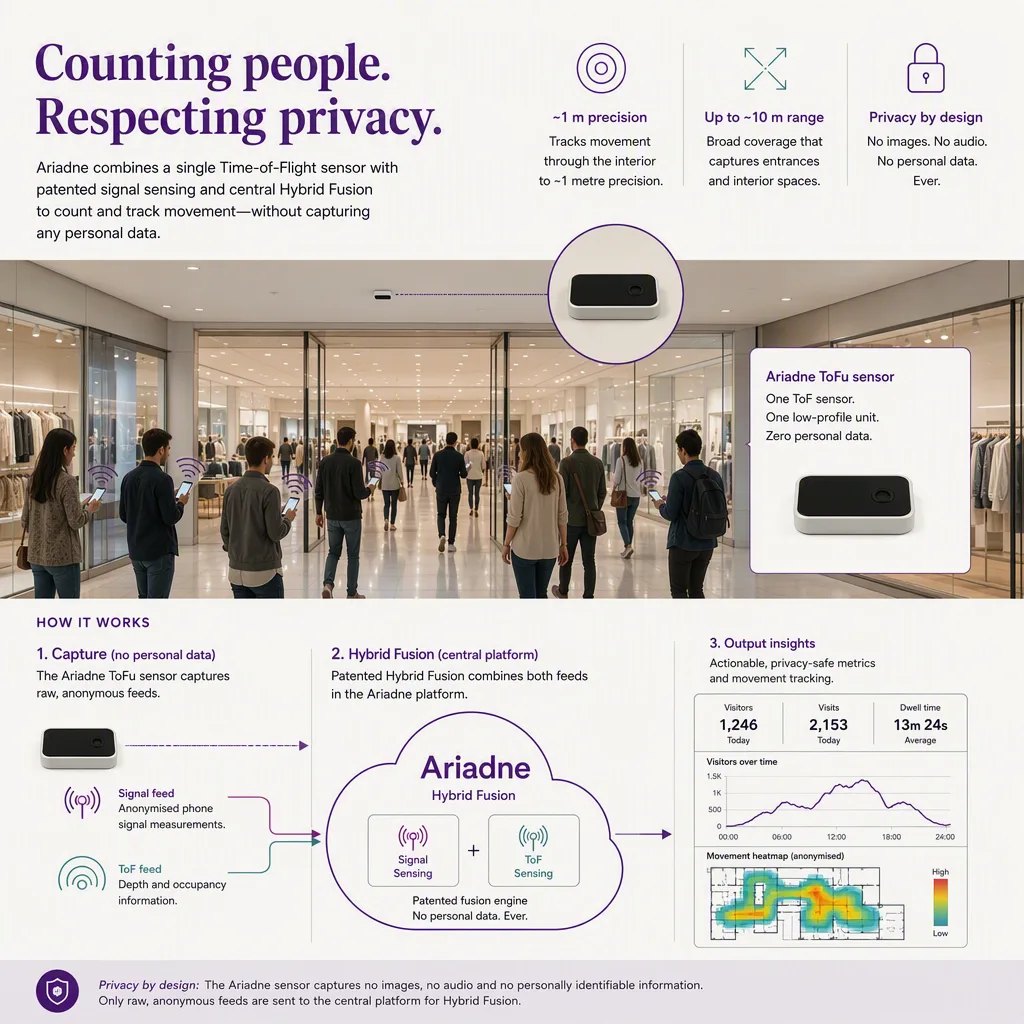
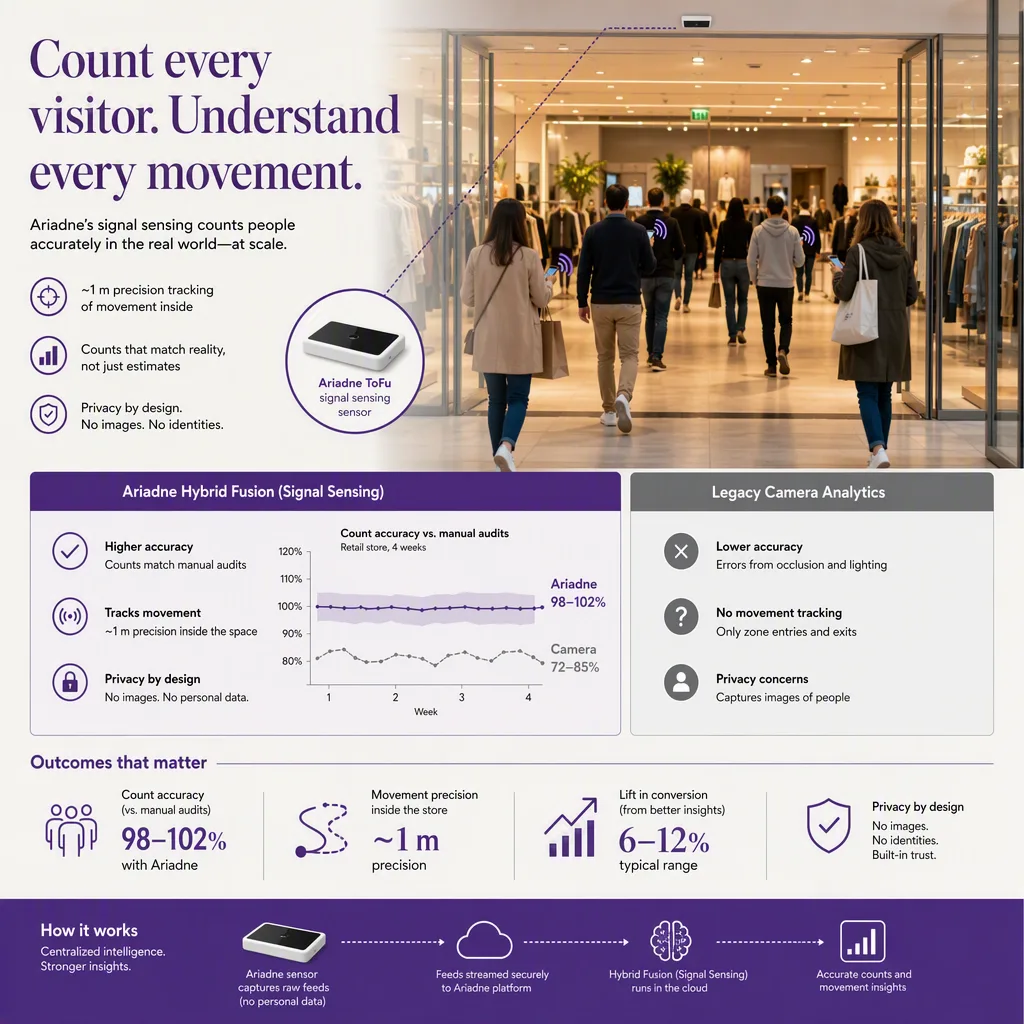
Ariadne's measurement is camera-free by construction, which is the property that most often decides a public-sector privacy review, and its outputs are counts, dwell, and paths rather than recordings of people. For bodies that need to publish or defend their numbers, the acceptance-testing route matters as much as the sensor: verify on your own doors, then hold the vendor to it, per acceptance testing.
---


