
E-commerce changed how physical retailers operate. Better data about the customer, targeted service, and cheap experimentation gave online stores a real advantage over the shop floor. The interesting question is no longer which channel wins in the abstract; it is which advantages are structural, which were only ever a measurement gap, and what a physical store can do about each. This article works through the comparison honestly, then shows what closing the measurement gap looks like on a real floor.
Is brick-and-mortar better than e-commerce?
Neither channel is better in general; they win on different axes, and most retailers now operate both. E-commerce wins on convenience, assortment breadth, price comparison, and above all on measurement: every step of an online visit is instrumented by default. Physical retail wins on immediacy, physical trial, human help at the moment of doubt, and the fact that a visit is a deliberate act rather than a tab. The channel that loses is the one that cannot see its own funnel, which is why the measurement gap matters more than any feature comparison.
What each channel genuinely wins on
|  | E-commerce | Physical store |
| Convenience | Delivery to the door, no travel | Immediate possession, no waiting |
| Assortment | Effectively unlimited shelf | Curated, constrained by space |
| Trial | Photos, reviews, returns | Touch, fit, demo, feel |
| Help | Chat, FAQ, reviews | A person, at the moment of doubt |
| Price comparison | One tab away | Also one tab away, in the aisle |
| Measurement | Instrumented by default | Instrumented only if you install it |
Read the last row twice, because it is the one that is actually fixable. Every other line is a property of the format. Measurement is a choice.
What gives an edge to e-commerce
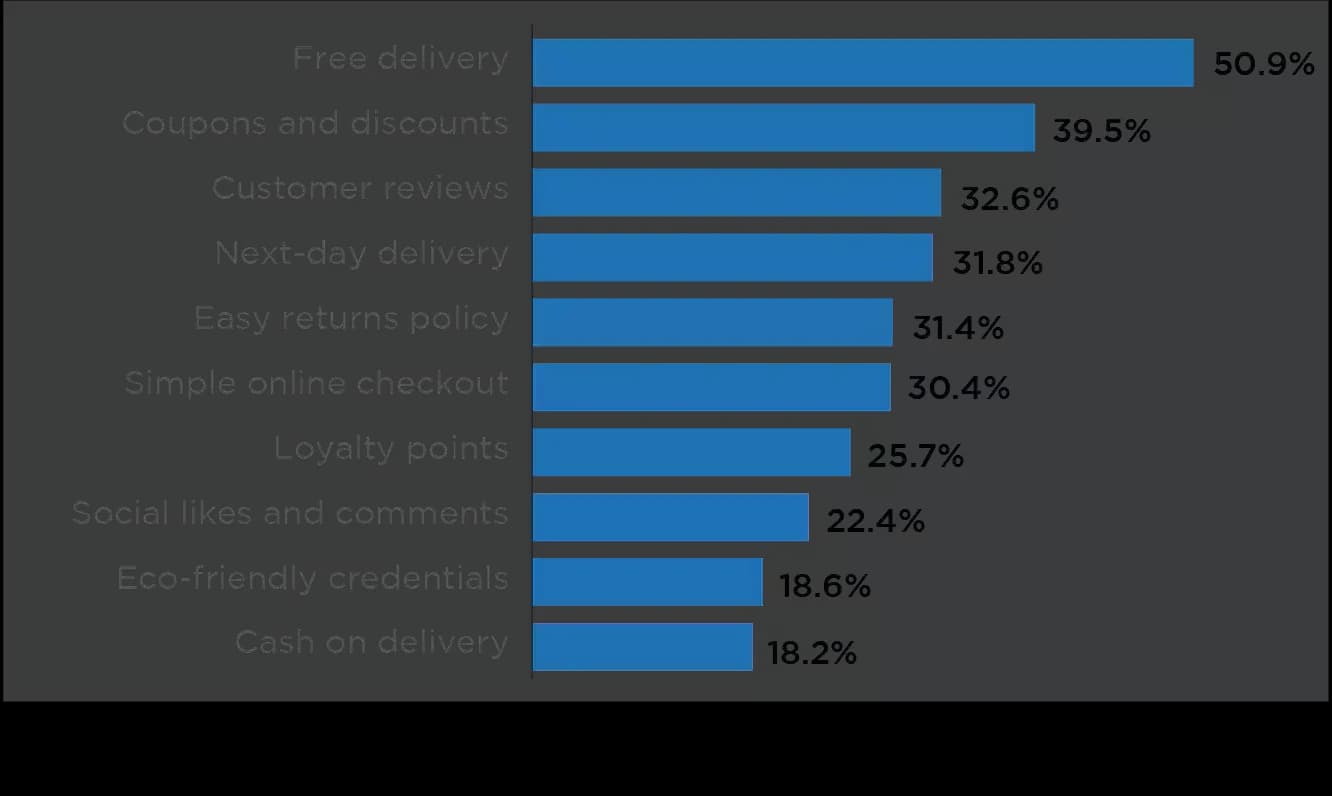
The obvious advantages are real. One click and the order arrives the next day, if not the same day, and (free) delivery is consistently the number one reason people give for shopping online. Other frequently cited reasons include the ability to use coupons and apply discounts (39.5%), read other customers' reviews (32.6%), return purchased items easily (31.4%), and a quick checkout process (30.4%) (Globalwebindex.com).
Underneath those, though, sits the advantage that compounds: online retailers can see everything. How many people landed on a product page, how long they stayed, what they clicked before and after, where they abandoned. With that data an online business rewrites its layout, reorders its categories, and tests a hypothesis in a week. None of that is a property of selling online. It is a property of being measured.
Click-and-mortar: the model that stopped being a compromise
The brick-and-mortar versus click-and-mortar comparison has quietly resolved itself: almost every serious physical retailer is now click-and-mortar, running stores and a transactional site as one business. What separates the ones that benefit from the ones that merely pay for both is whether the two channels share a measurement frame. Click-and-collect, returns in store, and endless-aisle ordering from the shop floor all create seams where a digital order becomes a physical visit or the reverse, and those seams are where the model earns its cost.
Two practical consequences. First, attribution has to be agreed in advance, because a collection visit that generates an attached purchase belongs to both channels and will otherwise be claimed by neither. Second, store layout has to account for journeys that begin at a counter rather than the front door, which is the subject of the post-purchase in-store journey, while the wider unification question is worked through in the omnichannel customer journey.
How physical stores compete with online retailers
Five plays, all of which depend on knowing what happens inside the store rather than guessing at it.
- Staff the peaks. Understaffing at measured peak hours is the most common cause of visits that arrive and leave without buying, and it is invisible in transaction data.
- Fix the entrance and the dead zones. Space that shoppers never reach cannot convert, and the first meters inside the door are systematically wasted.
- Make trial easy. Fitting rooms and working demo units are the advantages online cannot copy; a store that makes trial awkward has discarded its own edge.
- Answer the question online cannot. Long dwell without a purchase usually marks an unanswered question rather than a browsing preference.
- Measure the funnel like an e-commerce team does, then act weekly instead of annually.
The operational detail behind those sits in how to increase retail conversion, with the staffing mechanics in demand-based scheduling and the layout mechanics in retail layout optimization.
Closing the measurement gap
The e-commerce funnel translates almost line by line onto a shop floor once visits, zone reach, and dwell are measured: a session becomes a visit, a product-page view becomes a zone visit, time on page becomes dwell, add-to-cart becomes a trial event, and bounce becomes a visit that entered, reached nothing, and left. That mapping, and the traps in each row, is set out in offline vs online customer journey, with the KPI set in customer journey KPIs.
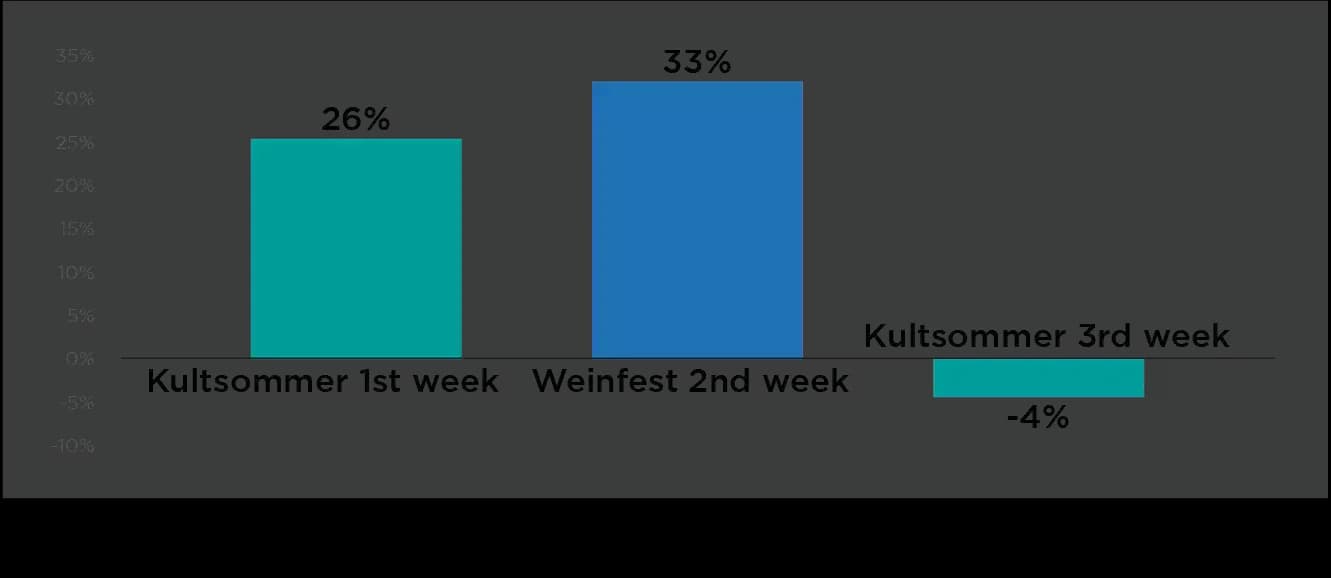
External factors that an online store never has to model also become visible once a floor is instrumented: weather and local events move physical footfall in ways that make a bad week look like a bad strategy. Ariadne's own city-centre deployments show the size of that effect, and it is quantified separately in weather impact on footfall.
Customer journey in a winner store
Here is what the closed gap feels like from the customer's side. A Saturday morning, after a family brunch, you decide to visit a furniture store for a TV unit. You check the store on your phone and see 184 people currently inside: busy but not unbearable, and probably no queue at checkout. You arrive, see which parking spaces are free, and drive straight to one.
You leave the car and the warmth of the store greets you, along with a notification: thank you for your visit, enjoy 15% off in our restaurant. You pass the mattresses, then the sofas, on the way to the TV units. A sofa catches your attention. It looks right but you are unsure about a few things, so you open your phone, see your position in the store, tap the sofa on the map and find 4.8 stars from 56 reviews. You scroll the reviews, decide you want it, but still have questions. Right then a store associate arrives and asks whether you would like any help. You ask, you are satisfied with the answers, and looking at the price again you decide to think about it.
Nothing in that scenario is exotic. Every element (live occupancy, parking availability, indoor position, reviews at the shelf, staff arriving at the moment of doubt) exists today, and each one is an e-commerce advantage brought indoors. The last one, staff arriving at the right moment, is the one that only a physical store can offer at all, and it depends entirely on knowing where dwell is concentrating.
Bringing the e-commerce advantages in-store starts with measuring what happens inside the store. Ariadne's people counting gives retail stores that data camera-free, as counts, dwell, and paths rather than footage, so the funnel becomes visible without the store becoming surveilled.


